Somewhere along the way, a lot of adults got the message that comics are either for kids or for people who already know the difference between a gutter and a splash page. Both ideas are wildly untrue. Graphic novels are book-length comics, meaning they tell stories using two languages at once: words and images. (And they can be fiction, nonfiction, memoir, essays, or something wonderfully hard to label.) If you've ever been moved by a film’s composition, a photograph’s mood, or a painting’s quiet detail, you've already got the skills to fall in love with this medium.
This list is built for true beginners: stand-alone picks or easy entry points, clear storytelling, and the kind of emotional payoff that makes you want to keep going. A little literary, a little propulsive, and yes, a couple that’ll leave you staring at the ceiling afterward in the best way. I also added one gentler, lighter option, because not every first date with comics needs to be emotionally devastating.
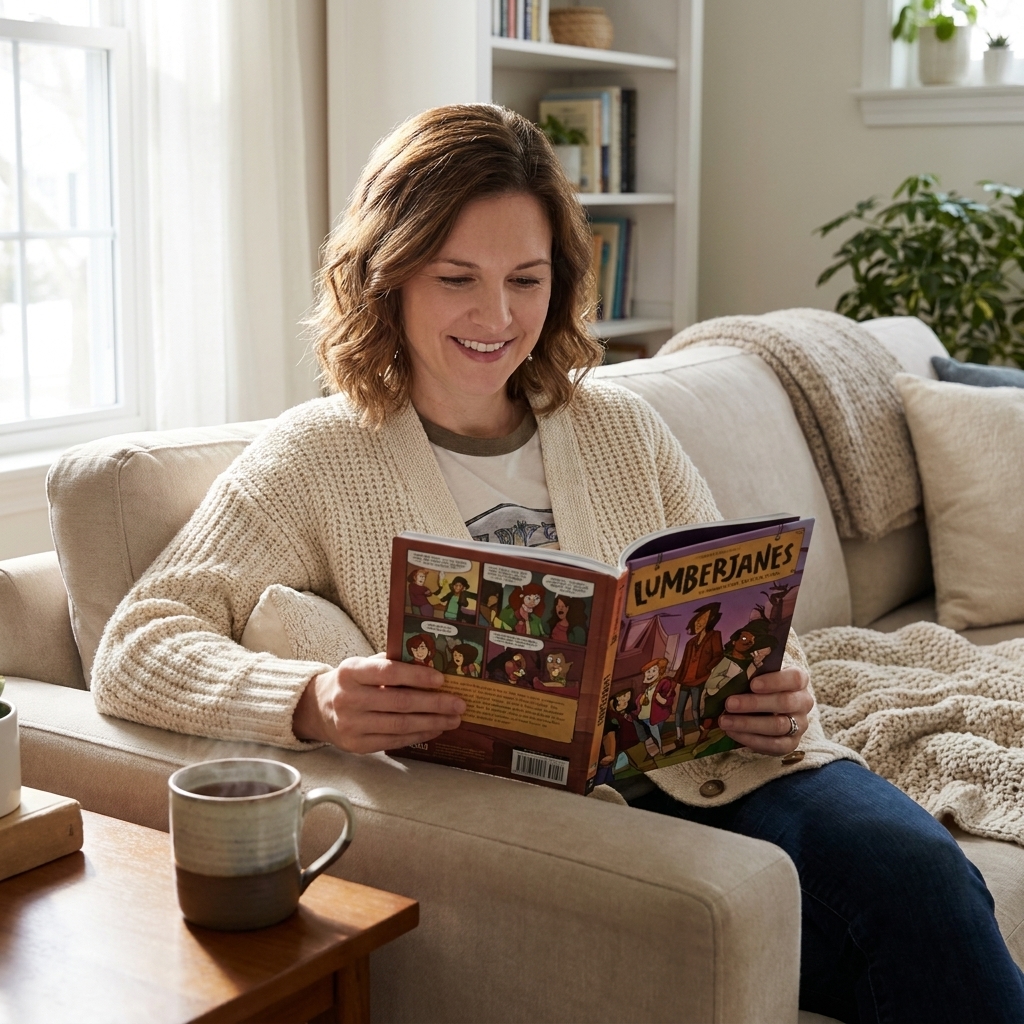
How to read comics without overthinking
If you're worried you'll be “reading it wrong,” let me gently take that fear and place it on the highest bookshelf.
- Let your eyes roam. Most English-language comics read left to right, top to bottom, but your eye will naturally linger on what matters. That's part of the magic. (Some experimental pages bend the rules, and manga is often right to left, so if something feels off, check the book’s reading guide.)
- Pause in the gutters. The blank space between panels is where your brain stitches the story together. If something hits you emotionally, it often happens there.
- Notice repeated visuals. A color, a shape, a framing choice can act like a recurring line of prose.
- Rereading is a feature, not a failure. Flipping back to catch a facial expression or background detail isn't “getting lost.” It's the medium inviting you closer.
The 7 essentials
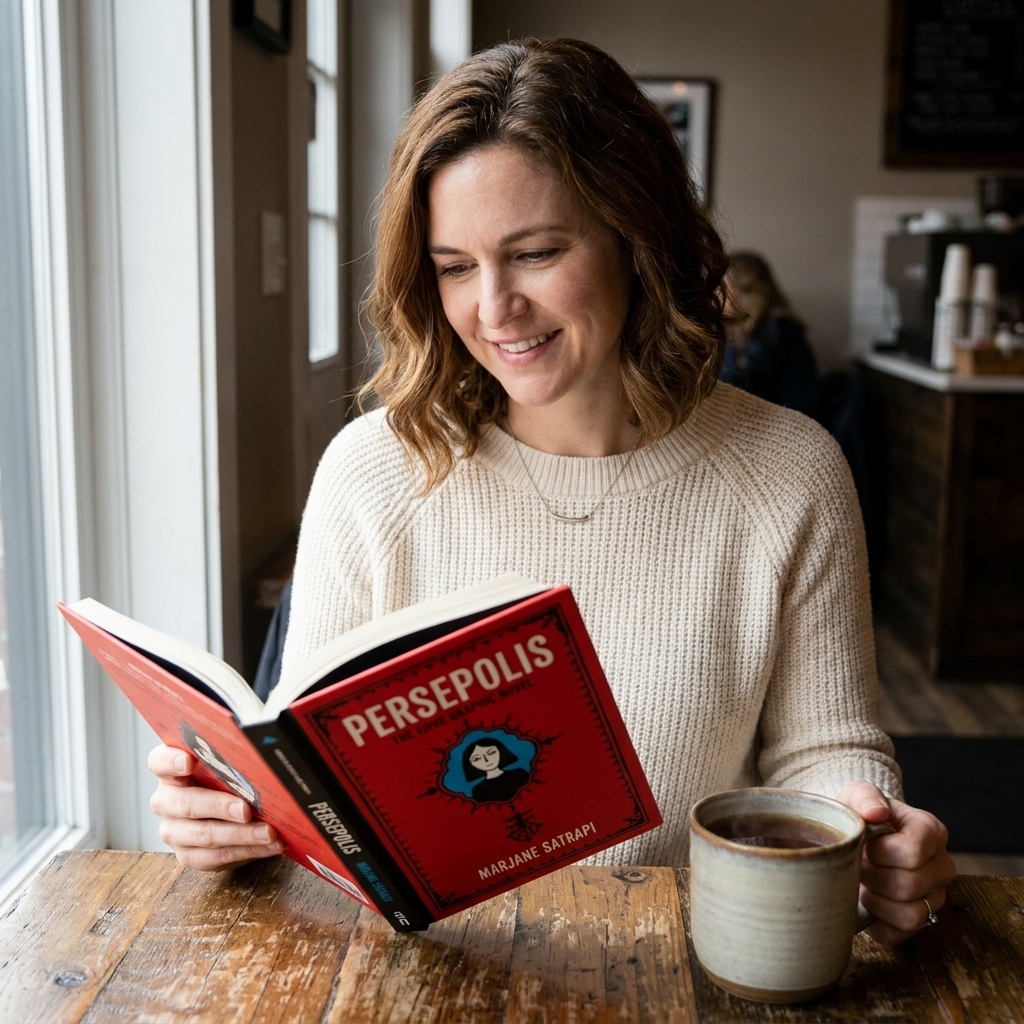
1) Persepolis by Marjane Satrapi
Best for: memoir readers who want history with heart.
Satrapi’s black-and-white art is deceptively simple, which makes the emotional and political complexity land even harder. This is her coming-of-age during and after the Iranian Revolution, told with humor, tenderness, and the kind of honesty that makes you feel like you're being trusted with someone’s real life. It’s also one of the most beginner-friendly graphic memoirs out there : clear paneling, strong pacing, and a voice you’ll follow anywhere.
Why it works for first-timers: The storytelling is straightforward, but the feelings aren’t. You get the rhythm of comics without needing any comics “background.”
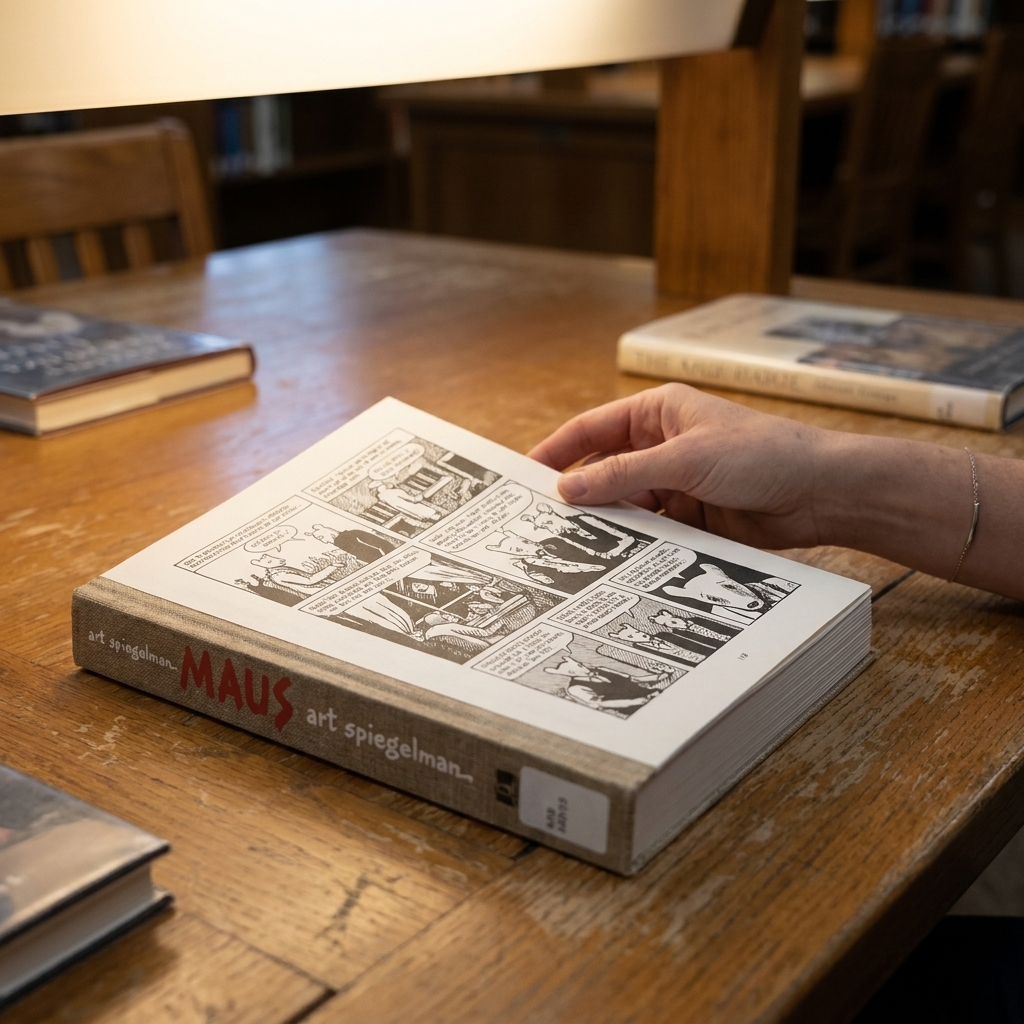
2) Maus by Art Spiegelman
Best for: readers who want literary nonfiction and family stories with gravity.
Yes, this is the Holocaust narrative you've heard about, and yes, it earns every ounce of its reputation. Spiegelman frames his father’s survival story alongside their tense, deeply human relationship in the present. The animal metaphor is striking on the surface, but what stays with you is the intimacy: the way trauma lives in a household, in habits, in silences.
Why it works for first-timers: It’s visually clear and narratively strong, and it shows how powerful comics can be for biography and history.
Gentle note: This is heavy. I wouldn't hand it to someone looking for a comfort read, but I would hand it to someone who wants to understand what the medium can carry.
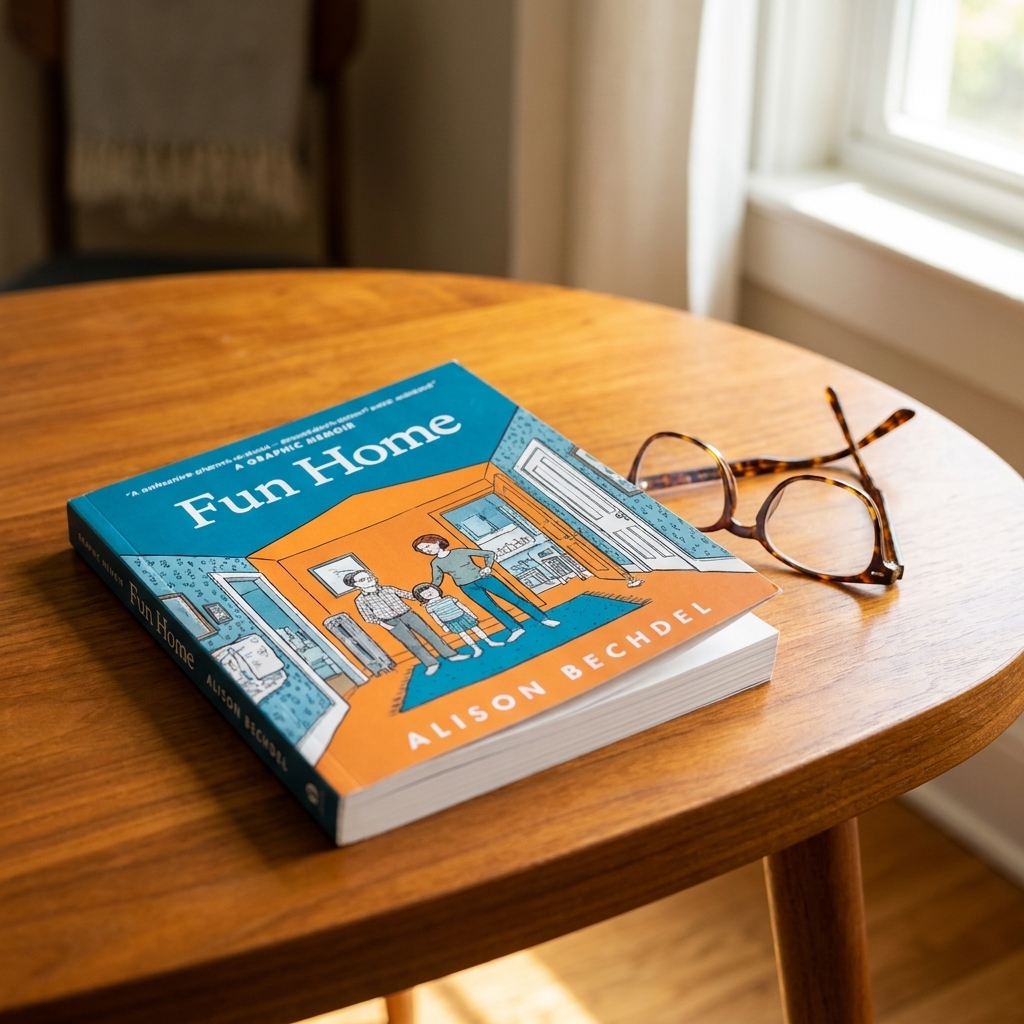
3) Fun Home by Alison Bechdel
Best for: lovers of memoir, theater kids at heart, and anyone who likes a book that rewards close reading.
Bechdel’s memoir of her father, her childhood home, and the slow unfolding of identity is meticulous in the most satisfying way. The drawings have a cool, architectural precision that mirrors the story’s obsession with surfaces: the restored old house, the careful performances of family life, the things that were said sideways instead of out loud.
Why it works for first-timers: The page layouts are readable and consistent, and the emotional arc is crystal. It also shows how comics can do literary allusion without feeling like homework.

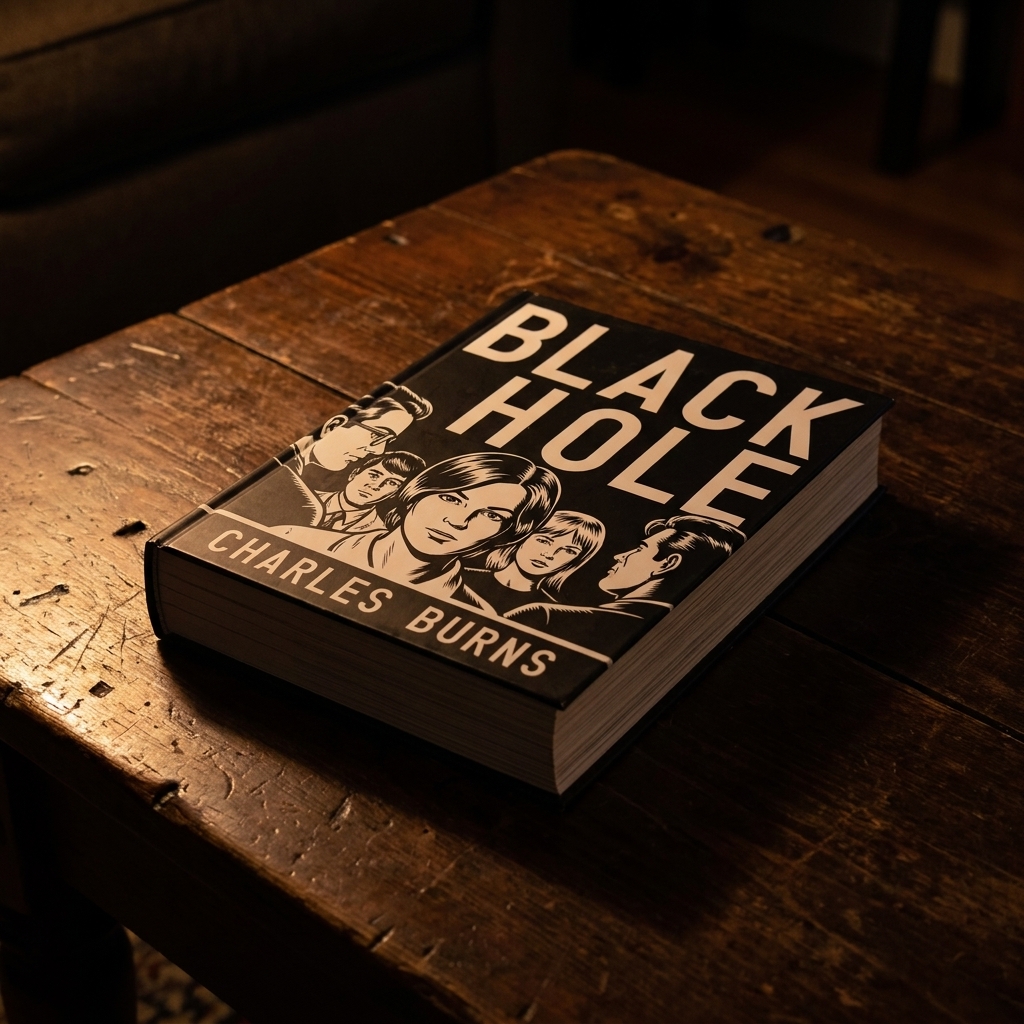
4) Black Hole by Charles Burns
Best for: horror-curious readers and fans of moody, literary coming-of-age.
If you like your adolescence stories with a side of dread, welcome. Set in the Pacific Northwest, this follows a group of high schoolers during a mysterious outbreak that causes unsettling bodily changes. Burns’ inky black art is gorgeous and severe, and the metaphor never stops working. One concrete thing to know going in: the book moves like a slow fever dream, with scenes that linger on mood as much as plot.
Why it works for first-timers: The visuals do so much of the storytelling that you quickly learn to “read” atmosphere, not just dialogue.
Gentle note: Body horror, sexual content, and bleakness. Proceed accordingly.
5) Saga by Brian K. Vaughan and Fiona Staples (Vol. 1)
Best for: sci-fi and fantasy readers who want something fast, funny, and emotionally sincere.
If you've been craving a big, bingeable story, this is the gateway. Two soldiers from opposite sides of an endless war fall in love, have a baby, and become the galaxy’s most wanted family. Staples’ art is vibrant and expressive, and Vaughan’s dialogue has that rare quality of being both sharply funny and disarmingly tender. It’s also a great introduction to how comics handle cinematic momentum: chase scenes, quiet beats, punchlines, and gut-punches, all in the same breath.
Why it works for first-timers: The storytelling is so propulsive you won't have time to feel intimidated.
Gentle note: Explicit content and some intense violence. Not a “read on the bus over someone’s shoulder” kind of book.

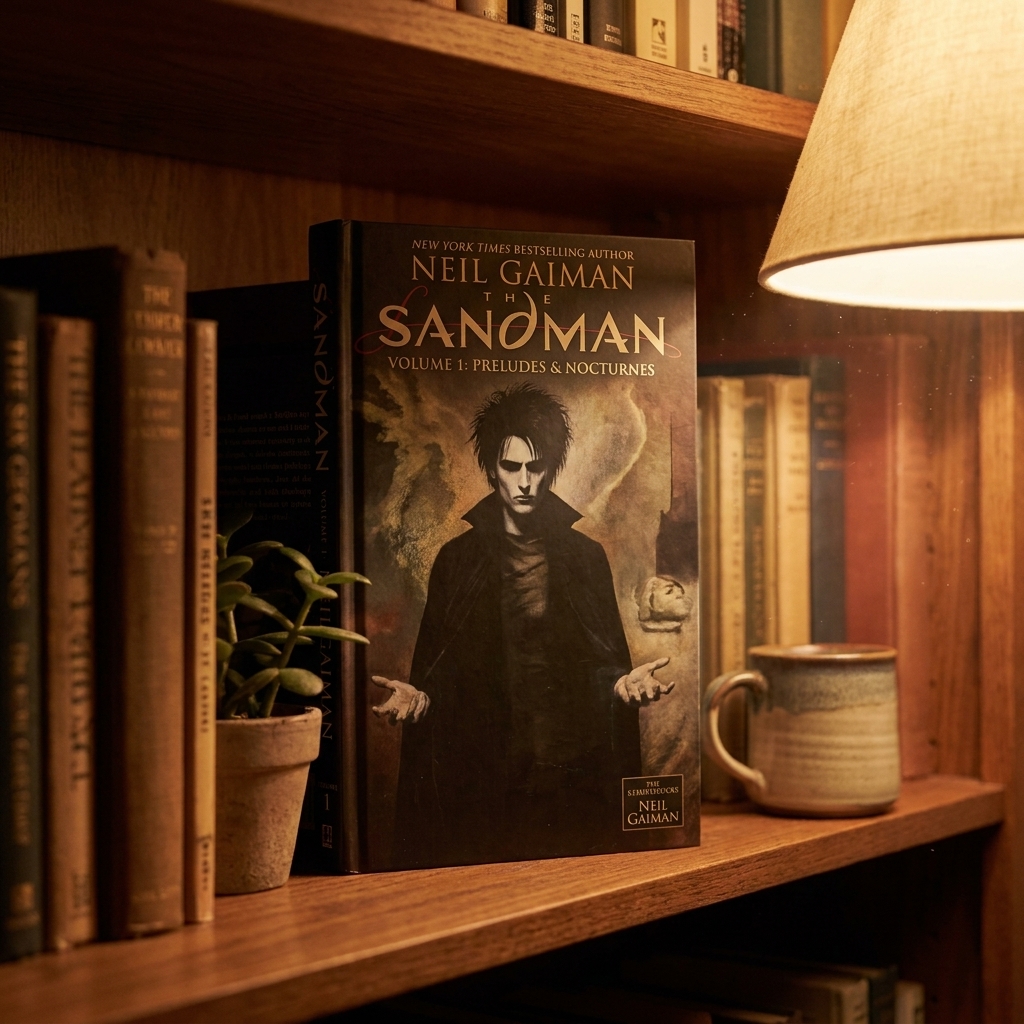
6) The Sandman by Neil Gaiman (Vol. 1: Preludes & Nocturnes)
Best for: readers who love myth, folklore, and that dreamy, candlelit feeling of old stories retold.
This is the one people recommend when you say, “I want something literary, but I also want it strange.” The central figure is Dream, also called Morpheus, and the series weaves mythology, horror, and dark fantasy into an episodic tapestry that keeps expanding. Start with volume one, and if you find yourself hooked, you've got a long, rich road ahead.
Why it works for first-timers: It introduces how ongoing comic series can feel, while still giving you satisfying arcs within a volume.
Tip: If the first issue feels more horror-forward than you expected, keep going. The series opens outward into something grander and more mythic.
7) Daytripper by Fábio Moon and Gabriel Bá
Best for: anyone who wants to cry a little and then call a friend.
This is the book I hand to people who say they don't know what graphic novels can do emotionally. Each chapter follows Brás de Oliva Domingos at a different stage of life, and each one contemplates mortality in a way that's strangely energizing. The art is warm and fluid, full of sunlight and shadow, and the structure reads like a collection of linked short stories, each complete on its own but deepened by the whole.
Why it works for first-timers: It’s contained, beautifully paced, and makes the case for comics as grown-up literature without any posturing.

Quick buying tips
- Choose by mood, not reputation. If you want comfort, don't start with the bleakest masterpiece on the shelf.
- Try a library browse first. Graphic novels are intensely personal. Sampling a few pages can tell you more than any review.
- Pay attention to art style. If you don't enjoy looking at the page, you won't want to linger. That's not a moral failing. It's taste.
- Format matters. Some books sing in hardcover, some are perfect in paperback, and some read best digitally if you prefer zooming in on detail.
FAQ
Are graphic novels “real” books?
Absolutely. They're books that use sequential art as a core storytelling tool. The craft lives in pacing, composition, color, lettering, and the interplay of text and image. Different toolset, same ambition.
What if I read fast and feel like I'm done too soon?
Try reading for revisiting instead of finishing. Slow down for facial expressions, background details, and recurring visual motifs. Many graphic novels are built to be reread like poetry.
I want something lighter. What should I pick here?
Saga is the most “just one more chapter” option if you're okay with adult content. If you want something reflective but not cynical, Daytripper is heartfelt without being bleak for bleakness’ sake.
What is the best first pick if I love literary fiction?
Fun Home is a wonderful bridge from prose memoir and literary essays into comics. If you want something more mythic and atmospheric, try The Sandman.
One easy starting point
If I could slide just one book across the table to a curious adult beginner, it'd be Persepolis. It’s welcoming on the page, unforgettable in the gut, and it tends to unlock that “Oh, I get it now” feeling that turns dabbling into a new lifelong reading lane.
If you try one of these, I'd love to know what you gravitated toward and what you want next. Consider this your permission slip to follow your curiosity.