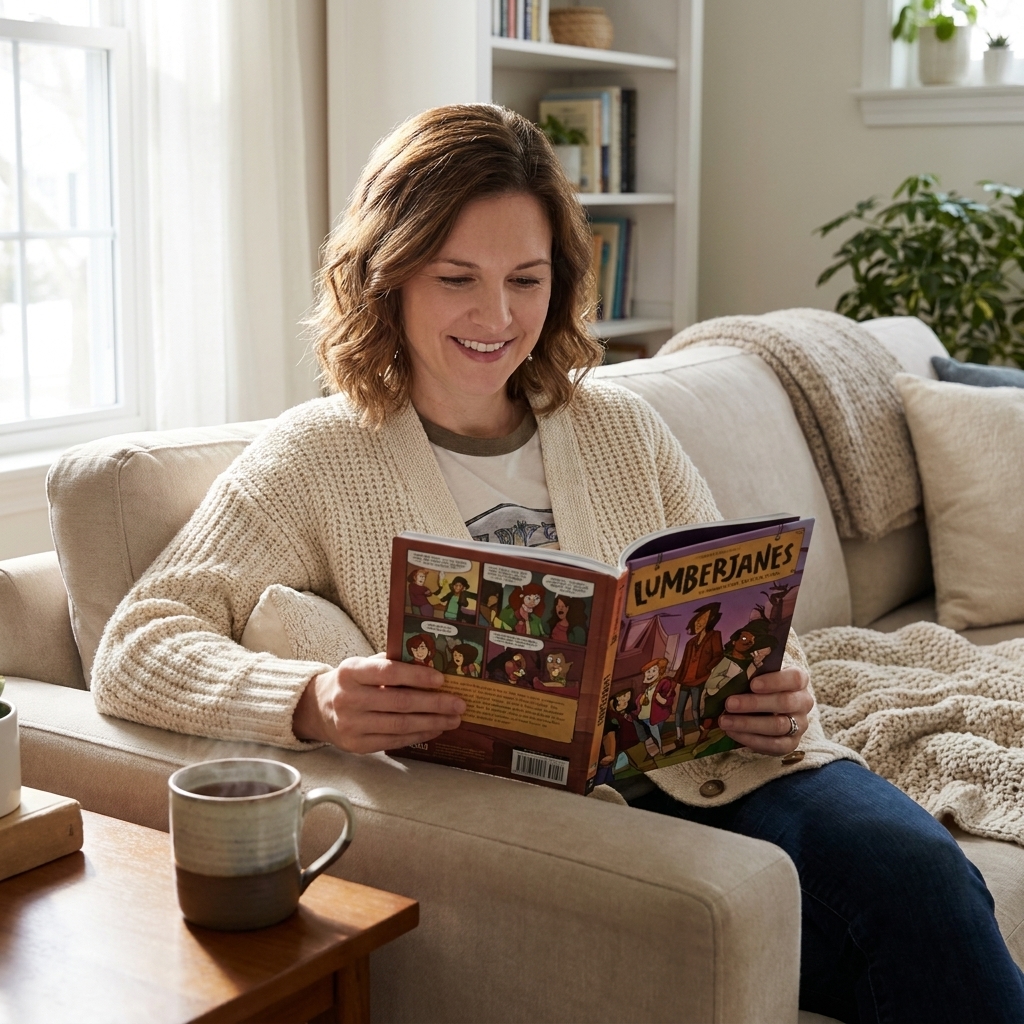
Some memoirs feel like sitting across from someone at a kitchen table while they tell you their life story, steam rising from the mug between you. Others feel like being handed a box of photographs, ticket stubs, doodles, and hard-won memories, and being asked to hold it all at once. That is the heart of the choice between traditional memoir and graphic memoir.
Neither is “better.” They simply move differently. One leans on voice, reflection, and the slow burn of language. The other uses the interplay of image and text to make memory feel immediate, embodied, and sometimes startlingly intimate.
What changes when memoir goes visual?
Memoir is already a tricky, beautiful genre because it is not just “what happened.” It is what it meant, shaped by time, perspective, and the narrator’s willingness to look back. When you add the grammar of comics (panels, gutters, page turns), you introduce a second storyteller: the page itself.
In a graphic memoir, you read with your eyes and your gut
- Pacing is physical. A page turn can act like a drumbeat. A silent panel can land like a held breath.
- Memory becomes spatial. Layout can mimic how recollection works: fragmented, looping, abrupt, or obsessively detailed.
- Emotion can be shown without being explained. Posture, negative space, repeated motifs, and color palettes do a lot of the work.
- Ambiguity can feel honest. A face half in shadow or a moment left wordless can communicate what prose sometimes over-defines.
One concrete example of the “motif magic”: a background object (a door left ajar, a recurring family photo, the same kitchen table) can show up across years. The meaning changes as you recognize it, even when the text stays quiet.
In a traditional memoir, voice becomes the room you sit in
- Interior reflection is expansive. Prose can linger inside a thought for pages, tracing cause and effect in a way images often handle more economically or indirectly.
- Time can stretch. A single childhood scene can be unpacked with the full weight of adult understanding.
- Language provides texture. Sentence rhythm, metaphor, and tonal shifts create their own kind of music.
- Context often deepens. Many prose memoirs can devote more space to historical, cultural, or family background without breaking momentum.
How it feels to read
If you have ever picked up a memoir and thought, “I just need something that will grab me,” the format matters more than we admit. Here is the most practical, reader-centered way I know to describe the difference.
Graphic memoir often feels like
- Immersion, fast. You are “in” the scene quickly, even when the subject matter is complex.
- Emotional clarity with room to interpret. The author can show you a look, a room, a childhood bedroom wall, and let you connect the dots.
- Momentum. Panels pull you forward, which can be a gift if you are in a reading slump.
- Re-readability. Many graphic memoirs reward a second pass because you notice background details, symbols, and visual echoes.
Traditional memoir often feels like
- A long conversation. You get the narrator’s full cadence, their humor, their hesitations, their self-interruptions.
- Deeper excavation. Prose often makes room for the “why” behind choices and the years-later reconsideration of an event.
- A slower build, then payoff. Many prose memoirs accumulate meaning in layers, like a stew that tastes better after it has had time.
- More room for worldview. You are not only following a life story, you are spending time inside a mind.
Which one fits right now?
I wish this could be a neat personality quiz, but readers are gloriously inconsistent. Still, if you want a quick nudge toward the shelf that will make you happiest this week, try these prompts.
Choose a graphic memoir if you want
- Story through sensory detail, like clothing, rooms, food, and facial expressions that land instantly.
- A different way into heavy topics. Graphic memoir can offer an on-ramp with breath built into the white space, though the immediacy of images can also make some stories hit harder.
- A change of reading rhythm. If you are burnt out on dense prose, comics can feel like opening a window.
- Art as autobiography. If you love visual art, design, or illustration, you get narrative and craft together.
Choose a traditional memoir if you want
- A strong narrative voice that you can live inside for 300 pages.
- More analysis and hindsight. If you crave reflection, commentary, and the emotional logic behind events, prose is generous.
- Long-form storytelling satisfaction. The arc often feels novelistic, with thematic threads that tie up slowly.
- Background and context. Many prose memoirs are built to hold history, culture, and family systems in one container.
If you are stuck, here is my favorite “manager of an indie bookstore” trick: pick a memoir topic you already care about, then sample both formats. The topic stays constant. The experience changes. Many readers find they know pretty quickly which one their brain wants right now.
Practical notes
A few real-world considerations, because love of a format is not the only factor.
- Accessibility varies by reader. Some dyslexic or ADHD readers find graphic memoir easier to enter because it is chunked and visual. Others find panels distracting and prefer clean prose or audio. Low-vision readers may prefer audiobooks or large-print editions, and some comics can be tough in small trim sizes.
- Length and cost can differ. Graphic memoirs are often shorter per volume and can cost more in print because of color and production. Libraries are a great way to sample widely.
- Audio is usually better for prose. Some graphic memoirs have audio adaptations, but the visual storytelling is the point, so audio alone can feel like getting only half the meal.
Recommendations: graphic memoir
These are standout reads that show why graphic memoir is not a “shortcut,” but a distinct art form with its own emotional precision. Taste varies, of course, but these are widely loved for good reasons.
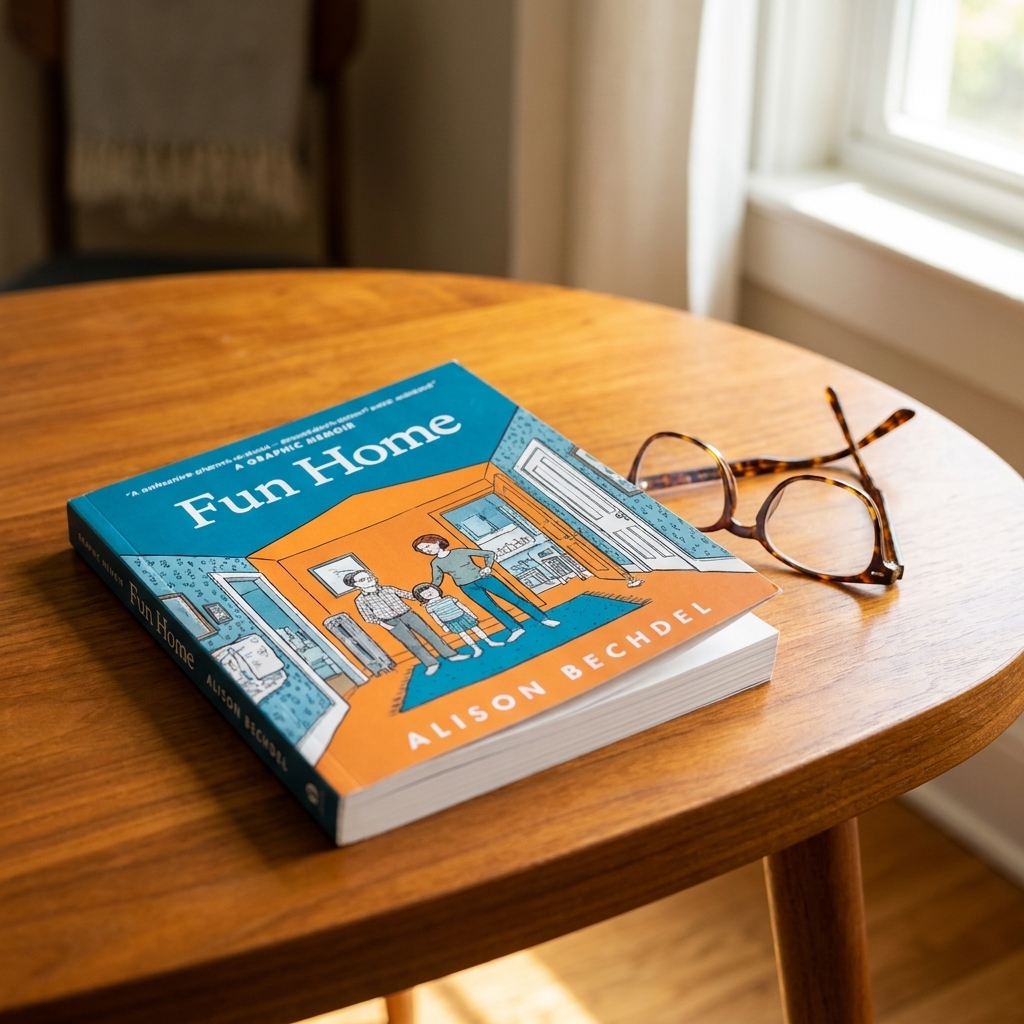
Fun Home by Alison Bechdel
A masterwork of family history, queerness, literature, and the strange archaeology of childhood. Bechdel’s panels feel architectural, like she is building a house you can walk through, room by room, memory by memory.
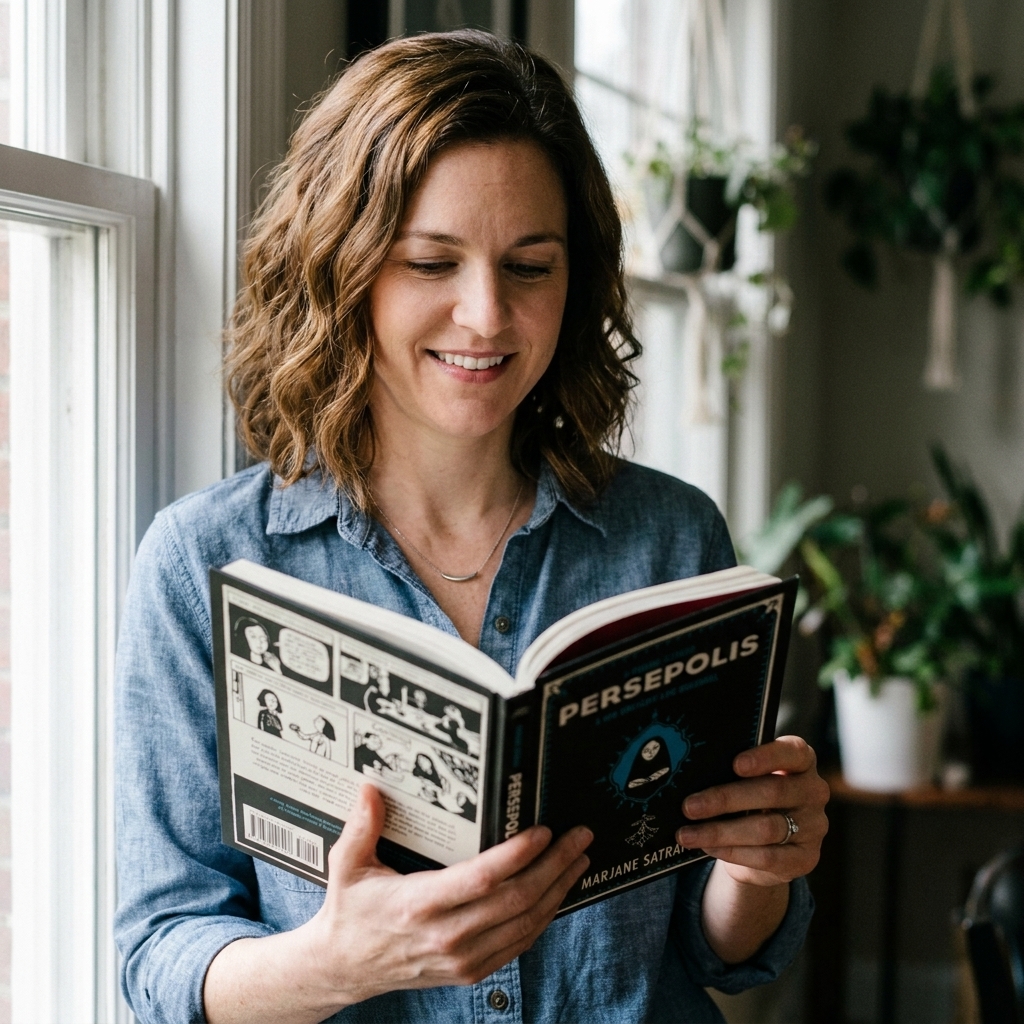
Persepolis by Marjane Satrapi
Coming-of-age during the Iranian Revolution, told with stark, expressive black-and-white art. It is accessible without being simplified, and devastating without being melodramatic.
Gender Queer by Maia Kobabe
An intimate, candid exploration of gender identity and self-understanding. The visuals do something especially tender here: they make interior experiences visible in a way plain description sometimes struggles to hold.
They Called Us Enemy by George Takei, Justin Eisinger, Steven Scott, and Harmony Becker
Takei’s childhood imprisonment in U.S. Japanese American incarceration camps is presented with clarity and urgency. A powerful choice for readers who want memoir braided tightly with history.
Spinning by Tillie Walden
A quietly aching story about competitive figure skating, adolescence, and the cost of chasing perfection. Walden captures loneliness and longing with a hush that feels unmistakably teen.

Recommendations: traditional memoir
If you are in the mood to be carried by voice, reflection, and the satisfying slow reveal of a life’s meaning, start here.
Educated by Tara Westover
One of the most propulsive modern memoirs I know, with the page-turning energy of a thriller and the moral complexity of a family epic. Westover’s storytelling makes you feel the tension between loyalty and selfhood in your bones.
When Breath Becomes Air by Paul Kalanithi
A surgeon faces his own terminal illness and writes with lucid clarity about purpose, identity, and what makes a life meaningful. It is slender, but it stays with you.
Hunger by Roxane Gay
Unflinching and deeply human, Gay writes about her body, trauma, and culture with a voice that is both fiercely intelligent and emotionally direct. A memoir that refuses easy lessons.
The Year of Magical Thinking by Joan Didion
Didion’s grief memoir is controlled, sharp, and piercing. If you like writing that feels crystalline on the sentence level, this is a classic for a reason.
Born a Crime by Trevor Noah
Warm, funny, and deeply grounded in lived experience, Noah’s memoir balances humor with real danger and tenderness. It is one I hand to reluctant memoir readers all the time.

Reader questions
Are graphic memoirs “easier” than traditional memoirs?
They are often faster to move through, but not necessarily easier. A graphic memoir asks you to read visual cues, interpret pacing, and notice what is implied between panels. The emotional work can be just as intense, sometimes more immediate.
Do graphic memoirs go deep, or are they mostly plot?
Many go remarkably deep, just in a different register. Visual motifs can carry theme. Repeated imagery can show patterns in family dynamics or trauma. And silence can be a form of commentary.
What if I struggle with comics formatting?
Start with a memoir that uses a clean, straightforward layout, then work outward. Persepolis is a famously welcoming entry point. Give yourself permission to slow down. In comics, slowing down is not “falling behind,” it is part of the pleasure.
Can I listen to a graphic memoir on audio?
Some graphic memoirs have audio adaptations, but you will miss a core part of the experience. If audio is your primary format, traditional memoir is usually more satisfying. If you want both, consider reading the graphic memoir first, then listening to interviews or author talks as a companion.
A gentle way to choose
If you want my most honest bookseller-ish advice: pick graphic memoir when you want immediacy, artistry, and momentum. Pick traditional memoir when you want to sink into a voice and watch meaning accumulate over time.
And if you can, try pairing them like a good meal: one graphic memoir for texture and bite, one prose memoir for depth and simmer. Your reading life gets bigger when you let both forms sit on the same shelf.