Dystopian fiction has always been a nervous system for its era. The classics gave us the big, unforgettable nightmares: the all-seeing state, the manufactured happiness, the handmaid’s uniform. But the last couple of decades have produced a new shelf of dystopias (and close cousins) that feel just as essential, and sometimes even more intimate. They’re obsessed with the stuff that crawls under today’s skin: algorithmic surveillance, gig-economy precarity, climate grief, disinformation, and the way language itself can be weaponized.
A quick note on labels: a few picks below live on the border between dystopian, post-apocalyptic, and speculative social satire. If the world has broken, and the brokenness is the point, I’m counting it.
Below are ten modern dystopian novels I’d hand to anyone who loves 1984 , Brave New World, or The Handmaid’s Tale, but wants stories that speak in a very current voice. These aren’t all bleak in the same way, either. Some are icy and brutal. Some are darkly funny. A few are oddly tender, the kind of books that remind you people keep finding each other even when the world is built to pull them apart.
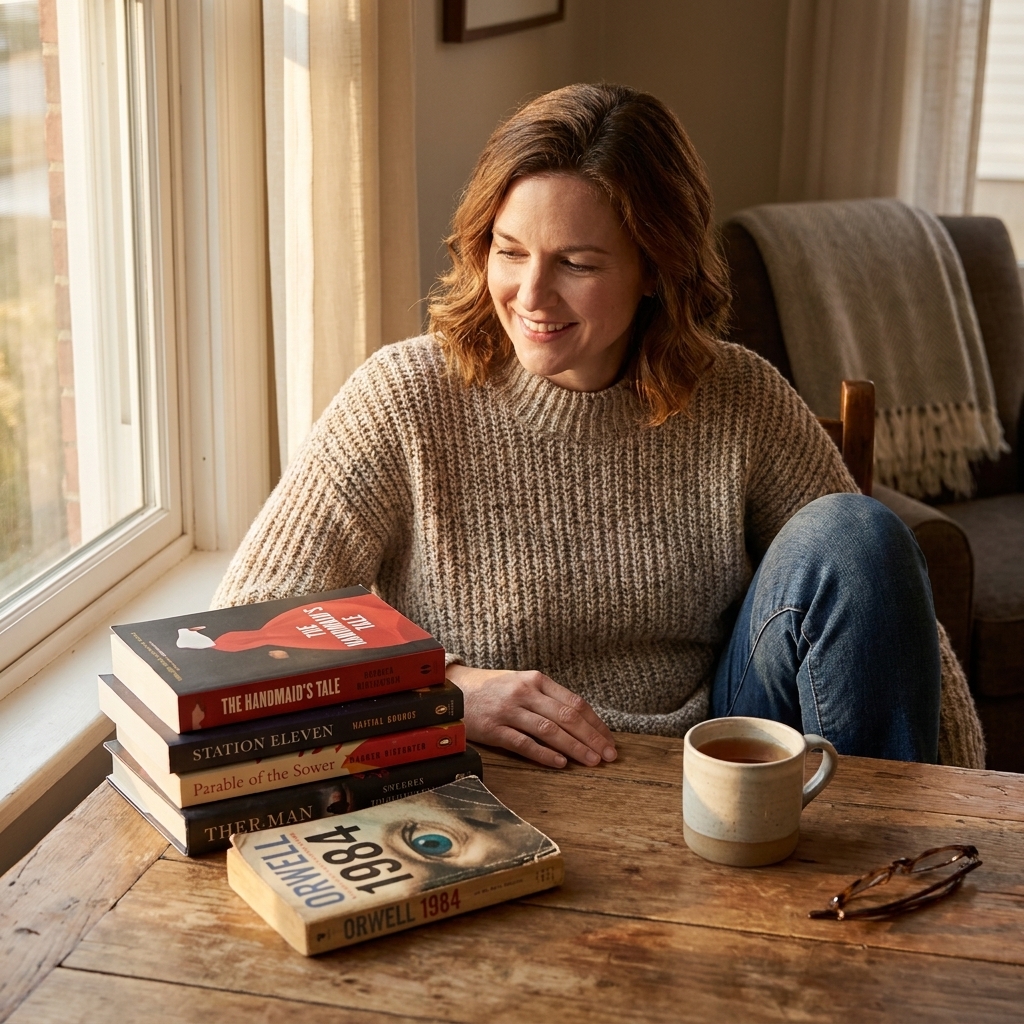
10 modern dystopian novels to read next
- Parable of the Sower (1993) by Octavia E. Butler
- The Road (2006) by Cormac McCarthy
- Never Let Me Go (2005) by Kazuo Ishiguro
- Oryx and Crake (2003) by Margaret Atwood
- The Windup Girl (2009) by Paolo Bacigalupi
- The Power (2016) by Naomi Alderman
- Station Eleven (2014) by Emily St. John Mandel
- The Water Knife (2015) by Paolo Bacigalupi
- Severance (2018) by Ling Ma
- The School for Good Mothers (2022) by Jessamine Chan
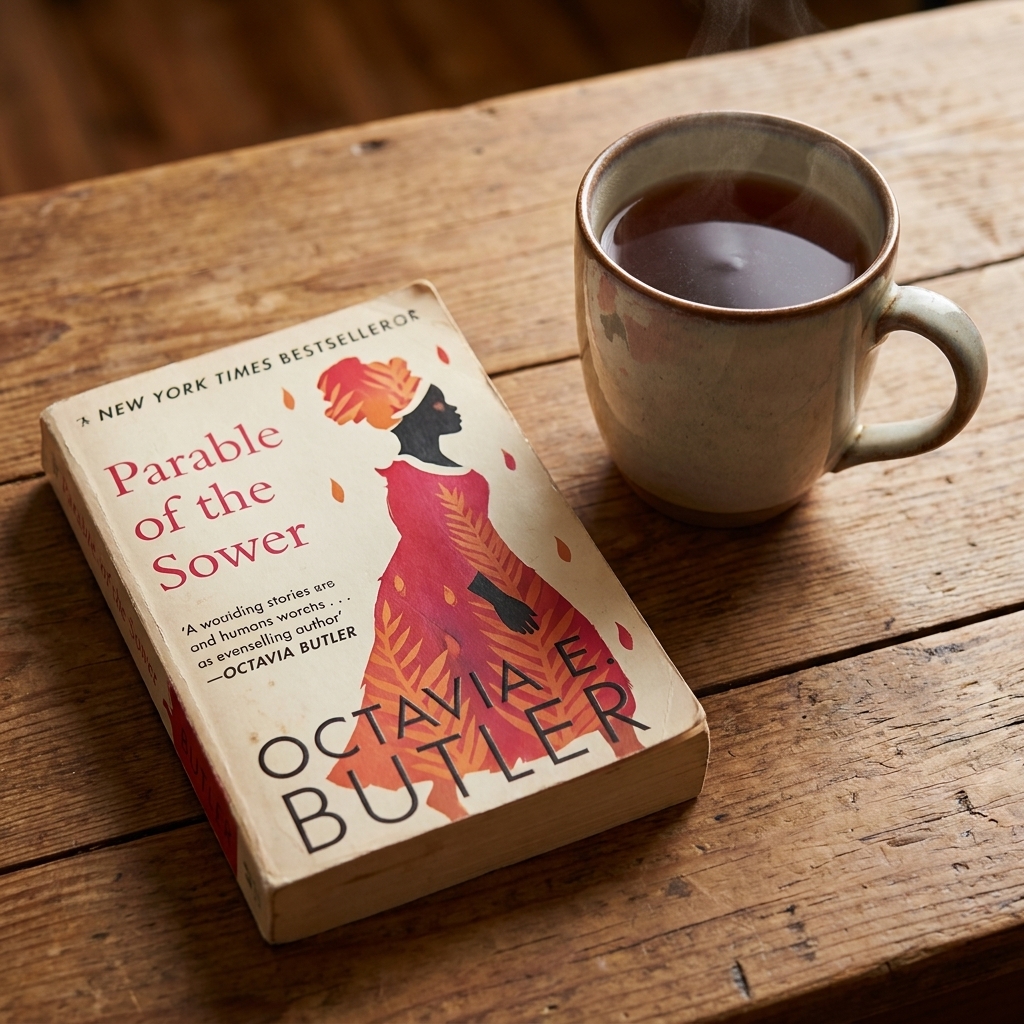
1) Parable of the Sower (1993), Octavia E. Butler
If you only pick up one book from this list, make it this one. Butler’s near-future America is fraying at every seam: economic collapse, gated communities, fires, privatized violence, and a constant sense that society is failing by inches and then by miles. Our narrator, Lauren Olamina, has hyperempathy, which means she involuntarily feels other people’s pain (and sometimes pleasure). It’s a brutal premise in a brutal world, but it also becomes a strange kind of moral compass.
What makes Parable rival the classics is how it refuses to be a thought experiment from a distance. It’s lived-in. It smells like smoke and fear and cheap gasoline. Then it asks the most haunting dystopian question of all: what do you build when everything is burning?
2) The Road (2006), Cormac McCarthy
The Road is a post-apocalyptic father and son story stripped down to bone and ash. If you’ve avoided it because you’ve heard it’s devastating, that information is accurate. It’s also strangely pure in its focus: love as a small flame you cup in your hands while walking through a dead landscape.
McCarthy’s dystopia doesn’t hinge on an authoritarian regime or a shiny new technology. Instead it leans on the oldest terror: scarcity, cold, hunger, and other humans. The book reads like a long, quiet exhale, and when it hits you, it hits you hard.
Content notes: violence, bleakness, implied sexual violence, harm to children.
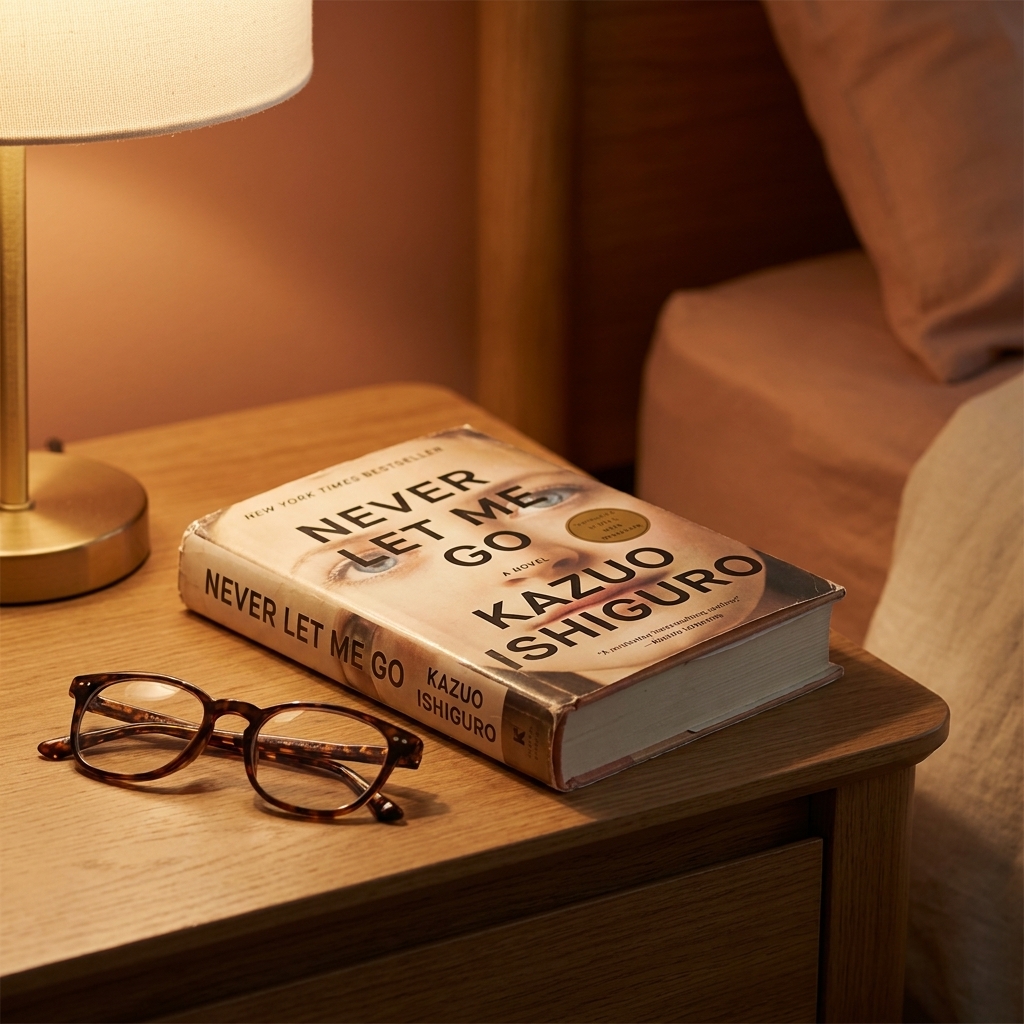
3) Never Let Me Go (2005), Kazuo Ishiguro
Ishiguro is the master of the soft-spoken gut punch. This novel begins in a secluded English school, the kind of place that looks pastoral from the outside and carefully controlled from within. The students grow up with a faint awareness that something is off, something unspoken. The dystopia here isn’t loud. It’s polite. It’s institutional. It’s built on the kind of social agreement that lets ordinary people look away.
What I love about Never Let Me Go is the way it understands how human beings adapt to almost anything, especially when the truth is delivered slowly, wrapped in manners and routine. It devastates precisely because it’s so tender.
4) Oryx and Crake (2003), Margaret Atwood
If you want a modern dystopia with the scope and bite of a classic, Atwood delivers. Oryx and Crake imagines a world split between corporate compounds and everything else, with biotech as both miracle and weapon. It’s sharp, darkly funny, and deeply unsettling about what happens when science is guided by profit and ego instead of ethics.
Atwood is also wonderful at showing how catastrophe is rarely a single moment. It’s a long chain of “sure, why not?” decisions, each one small enough to justify. This book makes that chain feel terrifyingly plausible.
5) The Windup Girl (2009), Paolo Bacigalupi
Set in a future Thailand reshaped by climate change and calorie wars, The Windup Girl is sweaty, tense, and relentlessly imaginative. Bacigalupi builds a world where food supply is power, corporations behave like empires, and genetic engineering has rewritten the planet’s ecosystems.
Think dystopia as geopolitical thriller, with a setting that feels richly specific rather than generically “future.” It’s a great pick if you like your bleakness with world-building you can practically taste.
Content notes: sexual violence, exploitation, graphic violence.

6) The Power (2016), Naomi Alderman
Imagine a world where teenage girls develop the ability to generate deadly electrical power. Now imagine how fast everything changes once physical power shifts. Alderman’s novel is provocative and wildly readable, the kind of book you keep flipping forward because the social dominoes are falling in real time.
It’s also a smart companion read to classic gender dystopias. The Power does not just reverse roles for shock value. It interrogates how systems replicate themselves, how violence gets justified, and how quickly “natural order” becomes a story we tell to keep control.
7) Station Eleven (2014), Emily St. John Mandel
Not every dystopia is a boot on a neck. Sometimes it’s the quiet after a pandemic, when the world has already changed and people are trying to remember what mattered. Station Eleven follows a constellation of characters before and after societal collapse, including a traveling theater troupe performing Shakespeare for scattered communities.
This book is a love letter to art as survival. It’s also a gentle reminder, delivered with a steady hand, that civilization is more fragile than we like to believe. If you want dystopian fiction that leaves you sad but somehow steadied, this is the one.
8) The Water Knife (2015), Paolo Bacigalupi
Yes, Bacigalupi gets two slots, because The Water Knife is one of the most effective climate dystopias I’ve ever read. It’s set in a near-future American Southwest where water rights are everything, and cities behave like rival kingdoms. The plot moves like a thriller, but the dread lingers because it feels like a slightly exaggerated headline.
It’s an easy recommendation for readers who love dystopia grounded in policy, infrastructure, and the terrifying consequences of “we’ll deal with it later.”
Content notes: violence, torture, sexual violence.
9) Severance (2018), Ling Ma
Severance is one of my favorite “wait, am I laughing or panicking?” novels. It follows Candace Chen as a plague spreads, but the real horror is the dead-eyed persistence of corporate routine. People keep going to work. They keep answering emails. They keep performing normalcy as the world empties out.
It’s a dystopia about capitalism as muscle memory, about how hard it is to stop doing what you’ve been trained to do even when it no longer makes sense. If you’ve ever stared at your calendar and thought, “surely none of this is real,” this book will feel like a mirror.

10) The School for Good Mothers (2022), Jessamine Chan
This is dystopia that starts with a mistake and spirals into a system. When Frida Liu has a bad day and makes an unforgivable parenting choice, the state intervenes and sends her to a program designed to determine whether she deserves to be a mother. The premise is chilling because it’s not about far-future tech so much as surveillance culture, judgment, and bureaucracy dressed up as “care.”
Chan writes with a clear, compassionate eye. The book is painful, yes, but it’s also a sharp critique of how societies punish women, especially mothers, by turning private struggle into public trial.
How to pick your next dystopian read
If you’re choosing based on mood, here’s a quick, no-snobbery map:
- Want a modern classic with prophetic heat? Try Parable of the Sower.
- Want literary devastation in a small package? Try Never Let Me Go or The Road.
- Want biotech and corporate nightmares? Try Oryx and Crake.
- Want climate collapse with thriller momentum? Try The Water Knife.
- Want something eerie, funny, and painfully familiar? Try Severance.
- Want dystopia that’s about bodies, power, and gender? Try The Power.
- Want hope threaded through the wreckage? Try Station Eleven.
FAQ
What counts as “modern” dystopian fiction?
I’m using “modern” loosely here to mean late 20th century through the present, especially books that respond to contemporary anxieties like climate change, biotech, surveillance, and economic precarity . Some of these are already old enough to have influenced a whole generation of writers, which is exactly why they belong on the same shelf as the classics.
Are these books all bleak?
Not all of them. Dystopia can be brutal, but it can also be quietly human. Station Eleven, for example, is threaded with longing and beauty. Even the darker books often contain a stubborn little heartbeat of connection.
What if I’m in a reading slump but want dystopia?
Try the faster-paced ones first: The Water Knife reads like a propulsive thriller, and The Power has that “just one more chapter” energy. If you want something shorter in feel, Never Let Me Go is deceptively quick, even though it leaves a long echo.
If you have a favorite modern dystopian novel that lives rent-free in your brain, I’m always taking recommendations. My cats, Brontë and Yotam, are not helpful here. They mostly advocate for books that are excellent for sitting on.