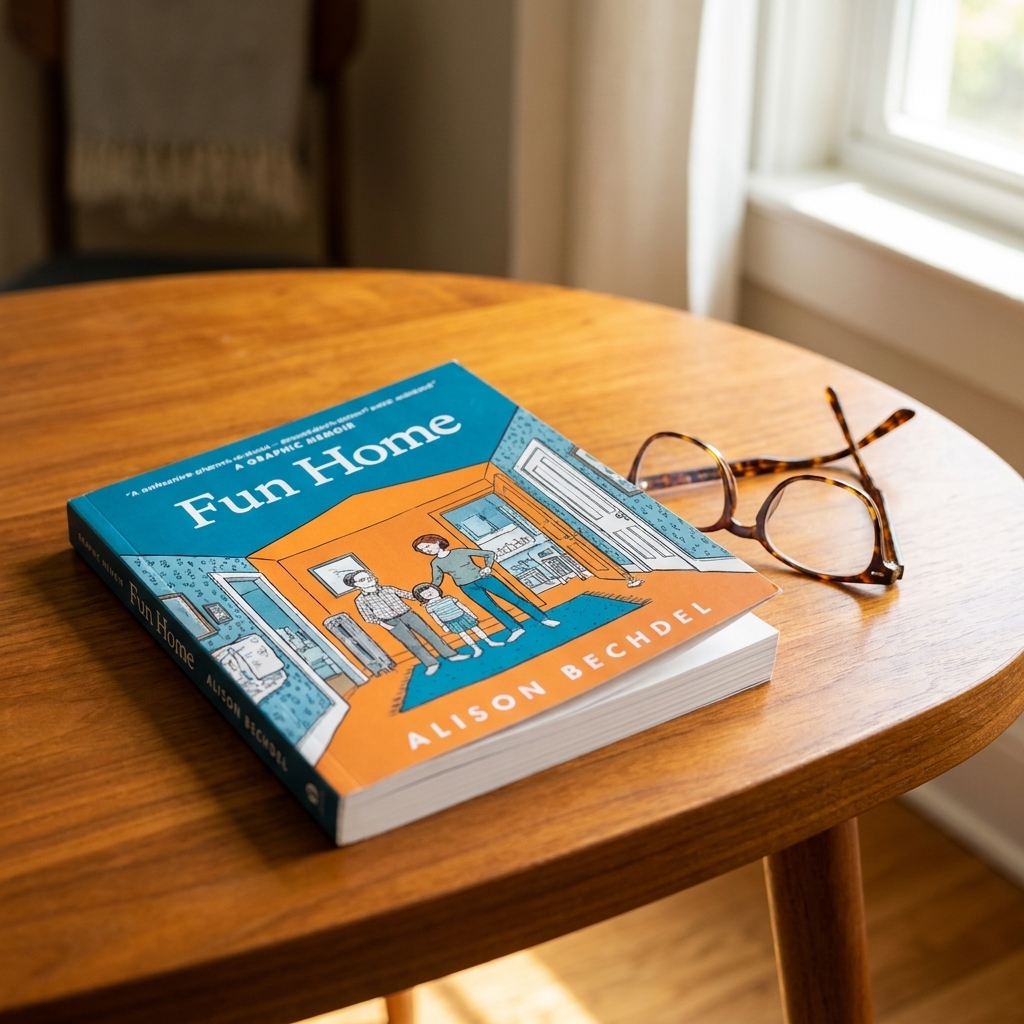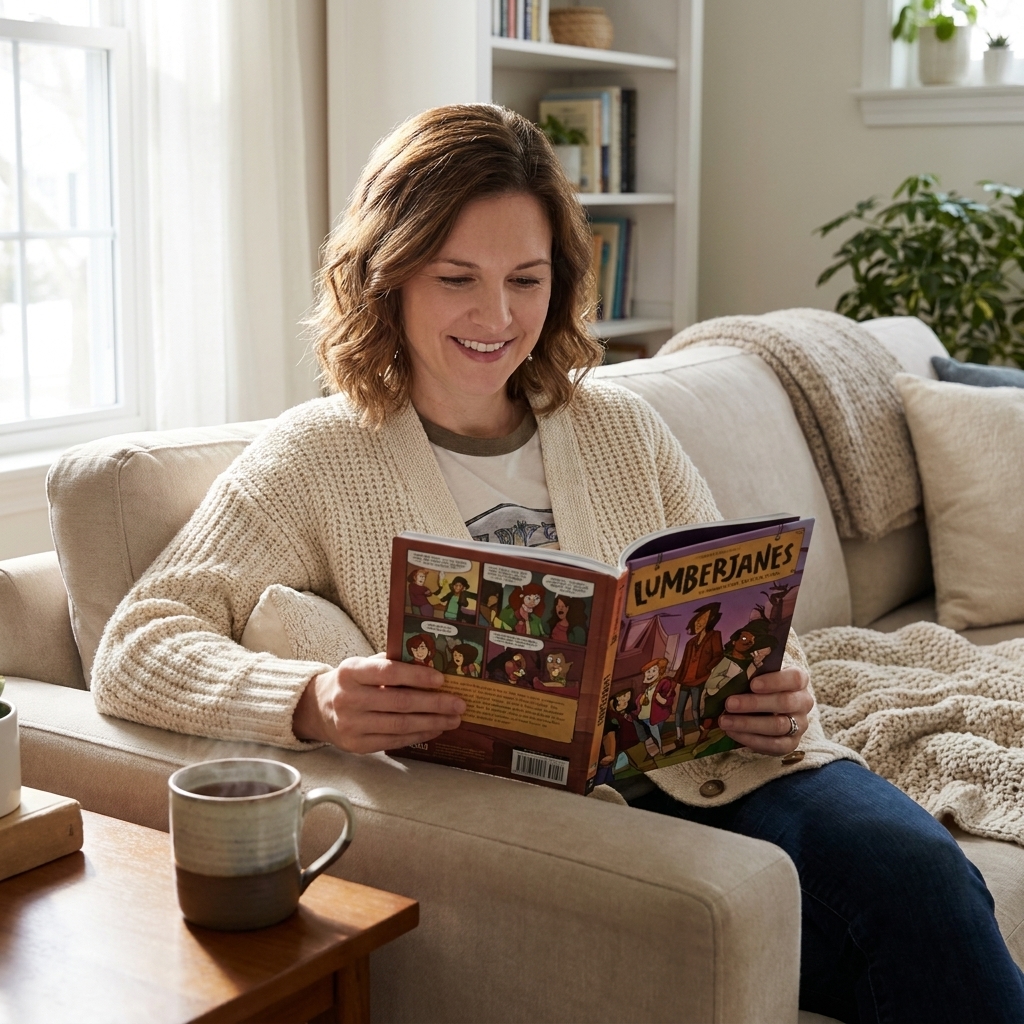
There is something uniquely brave about a graphic memoir : it asks you to see what the author lived through, not just read about it at a safe distance. When mental health is the terrain, that visual layer can feel like a hand on your shoulder, steadying, honest, and sometimes startlingly specific in a way plain text cannot quite manage.
Below are seven graphic memoirs (and one graphic memoir-adjacent classic) that tackle anxiety, depression, trauma, chronic illness, addiction, and recovery with care and craft. Some are quiet and intimate. Others are wry, furious, or formally inventive. All of them made me pause, reread panels, and think: yes, that is what it can feel like.
1) Marbles by Ellen Forney
If you have ever wondered what it is like to bargain with your own brain, this one lands like a bell. Forney writes about living with bipolar disorder and the terrifying, tender question at the center of so many creative lives: if medication steadies you, what happens to the spark?
What makes Marbles so gripping is how it mixes the immediacy of lived experience with visual riffs on art history, mood charts, and the slippery logic of hypomania. It is funny in places, raw in others, and never smug about answers.
- Best for: readers who want a smart, honest look at diagnosis, meds, and identity
- Content notes: mania, depression, suicidal ideation, hospitalization
2) Lighter Than My Shadow by Katie Green
Green’s memoir begins with an eating disorder, but it quickly becomes something larger: a portrait of how anxiety, trauma, and self-protection can braid together until your life feels both painfully small and impossibly loud. The art captures that lived contradiction, the way you can be disappearing and still feel like too much.
What stays with me is the honesty about recovery being non-linear. There is relief here, and hard-won insight, but no miracle montage. It is a book that respects the reader enough to tell the truth, panel by panel.
- Best for: readers looking for a compassionate, clear-eyed memoir about trauma, anxiety, and recovery
- Content notes: eating disorder, self-harm, sexual assault, trauma, anxiety
3) The Best We Could Do by Thi Bui
This is a memoir that holds personal trauma and historical trauma in the same frame, and somehow makes that feel not overwhelming but deeply humane. Bui traces her family’s story from Vietnam to the United States, threading parenthood, war, displacement, and the complicated inheritance of pain.
Mental health here is not presented as a neat arc from “broken” to “fixed.” Instead, it shows how fear, scarcity, and survival strategies echo across generations. It is a beautiful reminder that healing often includes understanding what shaped the people who shaped you.
- Best for: readers interested in intergenerational trauma, family systems, immigrant stories
- Content notes: war, displacement, family violence, trauma
4) Hey, Kiddo by Jarrett J. Krosoczka
Some books feel like a door you did not realize you needed to open. Hey, Kiddo is Krosoczka’s memoir of growing up with a mother struggling with addiction, being raised by grandparents, and finding steadiness in art when everything else is unstable.
The pages are packed with longing and grit, but also an enormous amount of love. It is especially powerful for readers who grew up becoming “the responsible one” too early, and for anyone who found a life raft in drawing, music, or stories.
- Best for: readers who want a compassionate, teen-to-adult coming-of-age shaped by addiction
- Content notes: parental addiction, neglect, incarceration, family instability

5) Hyperbole and a Half by Allie Brosh
Brosh’s humor is the kind that makes you laugh and then, two pages later, makes your throat tighten. Her sections on depression and on how motivation can simply vanish are often shared for a reason: they capture the absurdity and the deadened heaviness with eerie accuracy.
This is not a tidy memoir, and it is not trying to be. It is a collection of illustrated stories and essays that reads like memoir in motion, told with a blunt sincerity that feels like a friend texting you the truth at 2 a.m. If you are in a fragile place, it can be both comforting and intense, so choose your timing.
- Best for: readers who like humor that does not dodge the dark parts
- Content notes: depression, emotional numbness
6) Stitches by David Small
Stitches is one of those graphic memoirs that you finish and then hold closed for a moment, just to breathe. Small recounts a childhood marked by silence, medical trauma, and emotional cruelty, with art that often feels like a nightmare rendered in careful pencil lines.
What makes it gripping in the truest sense is the way the book communicates what cannot be said. The unsaid becomes its own character. If you are interested in how trauma lives in the body and in family atmospheres, this is unforgettable.
- Best for: readers drawn to psychological memoirs and visual storytelling that leans surreal
- Content notes: childhood abuse, medical trauma, surgery, emotional neglect
7) Epileptic by David B.
This memoir is not solely about the author’s mental health, but it is profoundly about the psychological weather that chronic illness creates in a family. David B. chronicles his brother’s epilepsy and the way it shapes their home life, their hopes, and the stories they tell themselves to cope.
The visuals are bold and symbolic, turning fear and helplessness into recurring shapes and creatures. If you have ever lived alongside someone else’s illness and felt the complicated mix of love, resentment, guilt, and devotion, this one hits with rare honesty.
- Best for: readers interested in caregiving, family stress, and the mental load of chronic illness
- Content notes: illness, family distress, anxiety
How to choose
Because these books are immersive, picking the right one can make the difference between “that was cathartic” and “I need to stare at the wall for an hour.” Here is a gentle way to match your mood to the right read:
- If you want validation with humor: Hyperbole and a Half
- If you want meds, diagnosis, and creativity on the page: Marbles
- If you want trauma and recovery, told with care: Lighter Than My Shadow
- If you want family and intergenerational context: The Best We Could Do
- If you want a coming-of-age that centers resilience: Hey, Kiddo
- If you want a visually haunting trauma memoir: Stitches
- If you want symbolic, sweeping family psyche: Epileptic
If you are in a tender season, consider buddy-reading with a friend, spacing the chapters, or pairing your reading with something simple and grounding: a walk around the block, a familiar sitcom, a recipe you can practically make on muscle memory. Books can hold us, but we still have to take care of the reader doing the holding.
Quick FAQ
Are these good for beginners?
Absolutely. Graphic memoirs are often more approachable than people expect. The panels guide pacing, and the art carries emotion even when the topic is heavy. If you are new, Hey, Kiddo and Hyperbole and a Half tend to be easy entry points.
Do any include practical resources?
Most are primarily narrative, but Marbles engages directly with treatment, diagnosis, and the lived realities of managing symptoms. If you want something explicitly more guide-adjacent, Forney also wrote Rock Steady, which is a practical companion for living with bipolar disorder.
I want honesty without being wrecked. Where do I start?
Try The Best We Could Do for a balanced, reflective read, or Hey, Kiddo for a story that is tough but ultimately steadying. Save Stitches and Lighter Than My Shadow for a day when you have more emotional bandwidth.
If you or someone you love is in immediate danger or needs urgent help, contact local emergency services or a crisis hotline in your country. In the U.S., you can call or text 988 for the Suicide and Crisis Lifeline.