
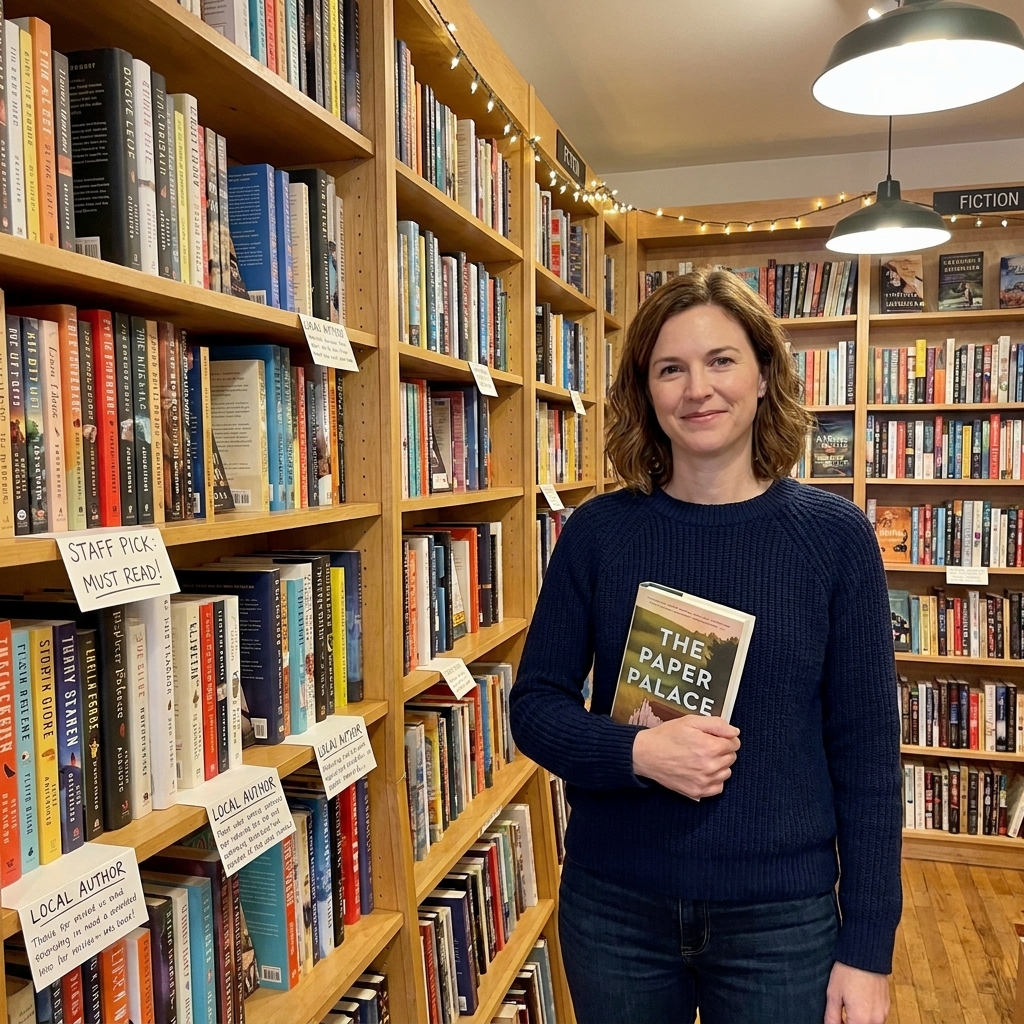
Walk into any bookstore and you will see the quiet tug-of-war play out in real time: a table labeled Literary Fiction over here, and a whole constellation of Mystery, Romance, Fantasy, Sci-Fi, and Thriller shelves over there. The labels can feel like a secret handshake. They are not. They are just imperfect shortcuts for helping readers find what they are hungry for.
Here is the gentle truth from someone who has shelved books for a living: literary fiction and genre fiction are less like rival teams and more like two different approaches to storytelling. One tends to prioritize how a story is told. The other tends to prioritize what happens next. Both can be gorgeous. Both can be profound. Both can keep you up too late, promising yourself one more chapter.
Quick definitions
What is literary fiction?
Literary fiction is typically character-driven, language-forward, and interested in the interior life. It often leans into ambiguity, emotional nuance, and the small seismic shifts of ordinary days. The plot can be present and even propulsive, but the book’s main engine is usually theme, voice, psychology, or style.
What is genre fiction?
Genre fiction is storytelling that works within recognizable conventions, promises, and pleasures: solving the mystery, falling in love, surviving the monster, winning the war, escaping the trap. Genre is a kind of pact with the reader: you have certain expectations, and the book knows it.
One helpful clarification: genre fiction is often grouped under commercial fiction, but commercial fiction is a bigger umbrella. It can include genre, upmarket novels, and other plot-forward books that are marketed for broad readership.
Important note: “commercial” does not mean shallow, and “literary” does not mean better. They are simply different emphasis points.
Key differences
If you have ever wondered why one novel ends up on a literary table while another lives in the thriller section, here are the factors that usually drive the decision.
1) Plot
Genre fiction often has a clear narrative destination. A crime is solved. A relationship resolves. A quest concludes. Even when the ending surprises you, it tends to feel structurally satisfying.
Literary fiction is often more comfortable with open doors than tied bows. You may finish feeling changed rather than “finished.” The story’s point might be the way the characters move through grief, desire, shame, ambition, or belonging, not the neatness of outcomes.
2) Character
Genre fiction frequently uses recognizable roles as an efficient storytelling tool: the detective, the chosen one, the reluctant hero, the rival, the love interest, the mentor. Great genre writing still makes these characters feel alive, but it may rely on familiar shapes to move quickly.
Literary fiction tends to linger longer on contradiction. People do not always learn the lesson. They want two incompatible things at once. Their choices make emotional sense even when they make no logical sense. That mess is often the point.
3) Language
In many genre novels, the prose is designed to be a clear pane of glass: you see the story through it quickly. That clarity is a skill, not a lack of craft.
Literary fiction is more likely to use prose like stained glass: style, imagery, rhythm, and sentence-level texture become part of the experience. You might pause to reread a paragraph, not because it is confusing, but because it is beautiful or startling.
4) Theme
Genre fiction often explores big themes through external stakes: power, justice, loyalty, survival, corruption, love. Literary fiction may explore similar themes but through internal stakes: memory, identity, intimacy, class, faith, the stories we tell ourselves to keep going.
5) Pacing
Genre pacing commonly escalates, tightening the screws. Literary pacing may be slower, more meditative, or structured around emotional turning points rather than action beats.
Of course, the best books steal from both toolkits.
Why the line blurs
Book categories are part art, part marketing, part reader expectation management. Many novels are proudly hybrid, and they deserve to be.
- Literary thrillers exist because some writers want both exquisite language and a ticking clock.
- Speculative literary fiction exists because surreal or futuristic settings can be the sharpest lens for looking at the present.
- Upmarket fiction (a term you will hear in publishing) often means accessible, plot-forward storytelling with literary polish.
One more reality of the ecosystem: “literary” can also be a positioning label. Awards culture, review venues, and imprint branding all influence how a book is packaged, pitched, and ultimately shelved.
If a book makes you feel something and also makes you want to keep reading, congratulations. You found the sweet spot where the labels stop mattering.
How shelving works
As a former bookstore manager, I can tell you that shelving is not a moral judgment. It is a practical choice based on where a reader is most likely to look. And it varies more than people think, from chain stores to indies to online retailers.
- Publisher imprint and marketing copy: If the publisher pitches it as a thriller, it often lands in thriller.
- Reader promise: A romance with a central love story and a romantic resolution usually goes to romance, even if the writing is luminous. Some stores shelve romance in its own section; others fold it into general fiction, so placement can differ.
- Dominant element: If the strongest hook is “Who killed her?”, it is probably mystery. If the hook is “What does grief do to a family over decades?”, it is probably literary, even if there is a mystery thread.
- Comparable titles: If it resembles books readers already find in a certain section, that is the section it will likely join.
And yes, sometimes a bookseller will move a title if customers keep asking for it elsewhere. The shelf is a living ecosystem.
What you might love
Choose literary fiction for
- Voice: A narrator you want to live inside for a while
- Emotional precision: The exact texture of a feeling you could not name
- Big questions: The kind that do not have clean answers
- Atmosphere: Place and mood that linger
Choose genre fiction for
- Momentum: Chapters that end with “Wait, what?”
- Structure: The comfort of a well-built arc and satisfying payoff
- High-concept fun: A premise that makes you text a friend immediately
- Clear stakes: Something to win, solve, survive, or secure
Neither list is exclusive. Some books deliver all of the above, and those are the ones we tend to hand-sell like we are trying to start a tiny book club that meets in secret.

Common misconceptions
“Literary fiction is plotless.”
Not necessarily. It is often plot-light compared to a thriller, but many literary novels have strong narrative drive. The difference is that the plot may serve character and theme more than spectacle.
“Genre fiction is formulaic.”
Conventions are not cages. They are tools. A traditional, puzzle-style mystery often aims for “fair play” clues. Other branches, like noir or psychological suspense, may care less about that kind of fairness and more about mood, voice, or moral pressure. Either way, working within a promise can be incredibly creative.
“Literary means sad.”
Some literary books are devastating. Some are hilarious, weird, tender, or quietly radiant. Likewise, genre fiction can be heartbreaking. Sorrow is not a genre.
“Genre fiction can’t be well written.”
That does not hold up in practice. Beautiful sentences live in every aisle. So do clunkers. The shelf label does not guarantee quality.
Pick your next book
If you are standing in front of the shelves feeling overwhelmed, try this little trio of questions:
- Do I want to be surprised by language or by events? (Both is also acceptable.)
- Do I want closure? If yes, genre often delivers it more reliably.
- Do I want to think, feel, or escape? Naming the craving helps. If you want escape, you might reach for fantasy, romance, or a thriller. If you want feeling, you might lean literary or upmarket. If you want thinking, you might choose something that foregrounds ideas, ethics, or social critique, in any section.
My favorite trick for breaking a reading slump is to alternate : a character-rich literary novel, then a zippy genre page-turner, then something hybrid. It keeps your reading life feeling playful.
Overlap examples
Rather than naming a dozen titles and accidentally starting a comment-section food fight, here are a few overlap types you can look for on blurbs and back covers:
- A family saga with a mystery spine: multi-generational literary storytelling plus a “what really happened?” thread.
- A romance with literary sensibility: lyrical prose, complex interiority, and a love story that still honors romance expectations.
- Speculative fiction with deep character work: a near-future or surreal premise used to explore identity, grief, power, or community.
- A crime novel with social critique: the case matters, but so does the world that produced it.
If you tend to like “a little of everything,” you are not indecisive. You are omnivorous. Welcome.
FAQ
Is literary fiction the same as classic literature?
No. Classics are older works that have endured culturally. Literary fiction is a publishing and bookstore category, and while it feels especially prominent in modern marketing, the term itself is not brand-new. Also, some classics were basically the genre fiction of their day, wildly popular and serialized.
What does upmarket fiction mean?
It usually means accessible storytelling with strong craft. Think: page-turning enough for wide appeal, but with more attention to voice, theme, and prose than typical category commercial fiction.
Can a book be both literary and genre?
Absolutely. Many of the most beloved novels are hybrids. If a book has a genre engine (mystery, romance, fantasy) and also prioritizes language and interiority, it can live happily in both conversations.
Is romance a genre or a category?
Both, depending on context. Romance is a genre defined by a central love story and a satisfying romantic resolution. In publishing, you may also hear category romance, which refers to specific lines with set lengths and house style expectations. Most bookstore romance shelves include a mix of category and single-title romance.
Why do some people look down on genre fiction?
A mix of history, snobbery, and misunderstanding. Genre fiction has long been associated with mass-market readership and so-called “popular” taste. But popularity is not the enemy of artistry, and never has been.
The takeaway
Literary fiction tends to ask you to linger. Genre fiction tends to ask you to race. Both can deliver meaning, beauty, catharsis, and sheer delight. The best reading life, in my opinion, has room for the bookshelf equivalent of a well-balanced dinner: something nourishing, something spicy, something sweet, and something you eat standing over the sink at midnight because you could not help yourself.
If you tell me what you have loved lately, and what you are craving right now, I will happily help you find your next match. No snobbery required.