There is a particular kind of kitchen chaos I know intimately: the shelf that looks like a library branch got lost and wandered into your pantry. Twenty books promising the perfect roast chicken, six different “quick” dinner bibles, and at least one well-meaning impulse buy that has never once been cracked open because it is, frankly, intimidating.
If your goal is a minimalist kitchen library, the trick is not to own fewer books just for the aesthetic of it. The trick is to own better books. The kind that teach you skills, not just recipes. The kind that stay useful even as your tastes change, your budget shifts, or your fridge looks a little bleak on a Wednesday at 6:12 p.m.
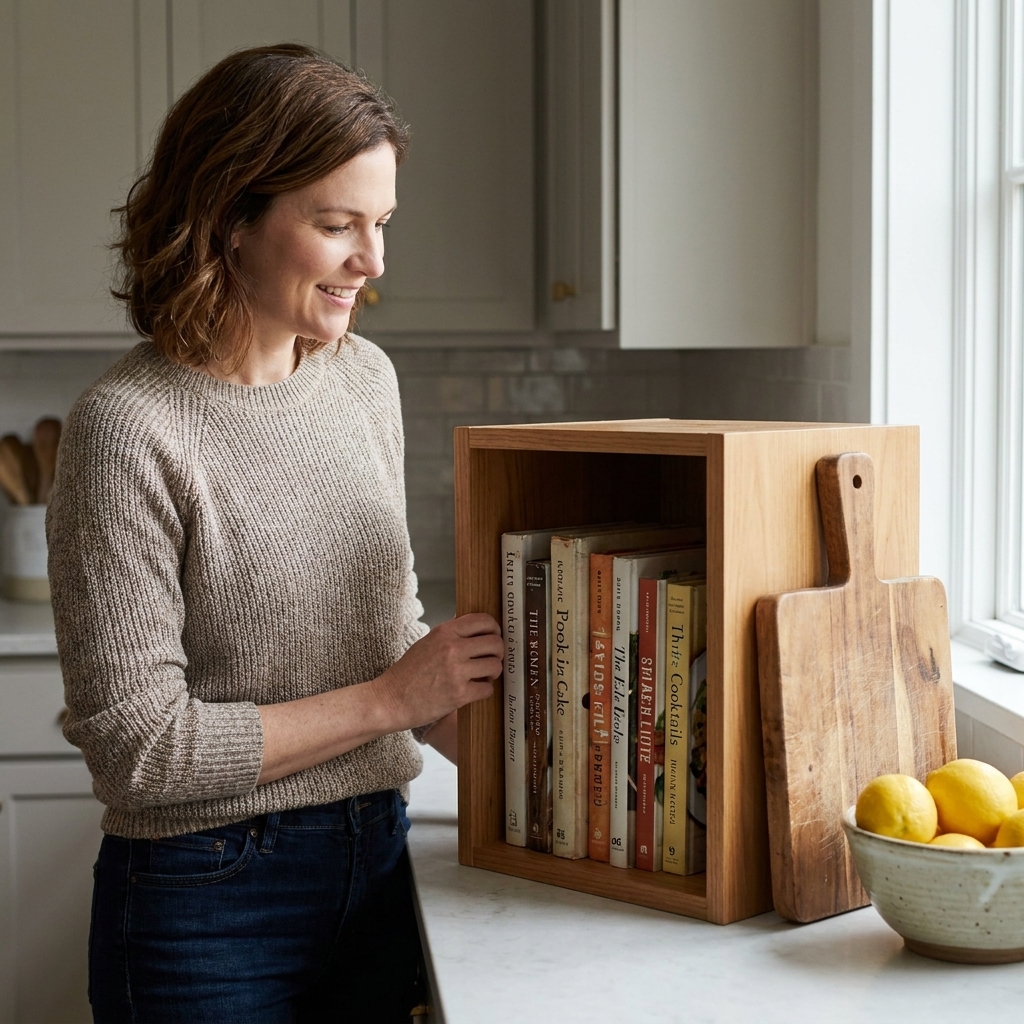
Below are five cookbooks I would build around for a strong, five-book minimalist shelf: technique, weeknight survival, baking, global flavor, and seasonal inspiration. I will also tell you who each book is for, what it does best, and what it will quietly teach you over time.
What “essential” means
Before we start stacking titles, here is my bookstore manager litmus test: an essential cookbook should earn its space by doing at least one of these things exceptionally well.
- It teaches transferable technique (so you can cook without the book).
- It solves a repeating problem (weeknights, leftovers, feeding people, using what you have).
- It has reliable ratios and foundations (especially for baking and sauces).
- It expands your flavor vocabulary in a way you actually want to use.
- It makes you excited to cook again, which is wildly underrated as a practical kitchen tool.
If a cookbook is only great for one hyper-specific mood, it is not essential. It is a fun guest. In a minimalist library, we are building the core household staff.
1) Technique: Salt, Fat, Acid, Heat
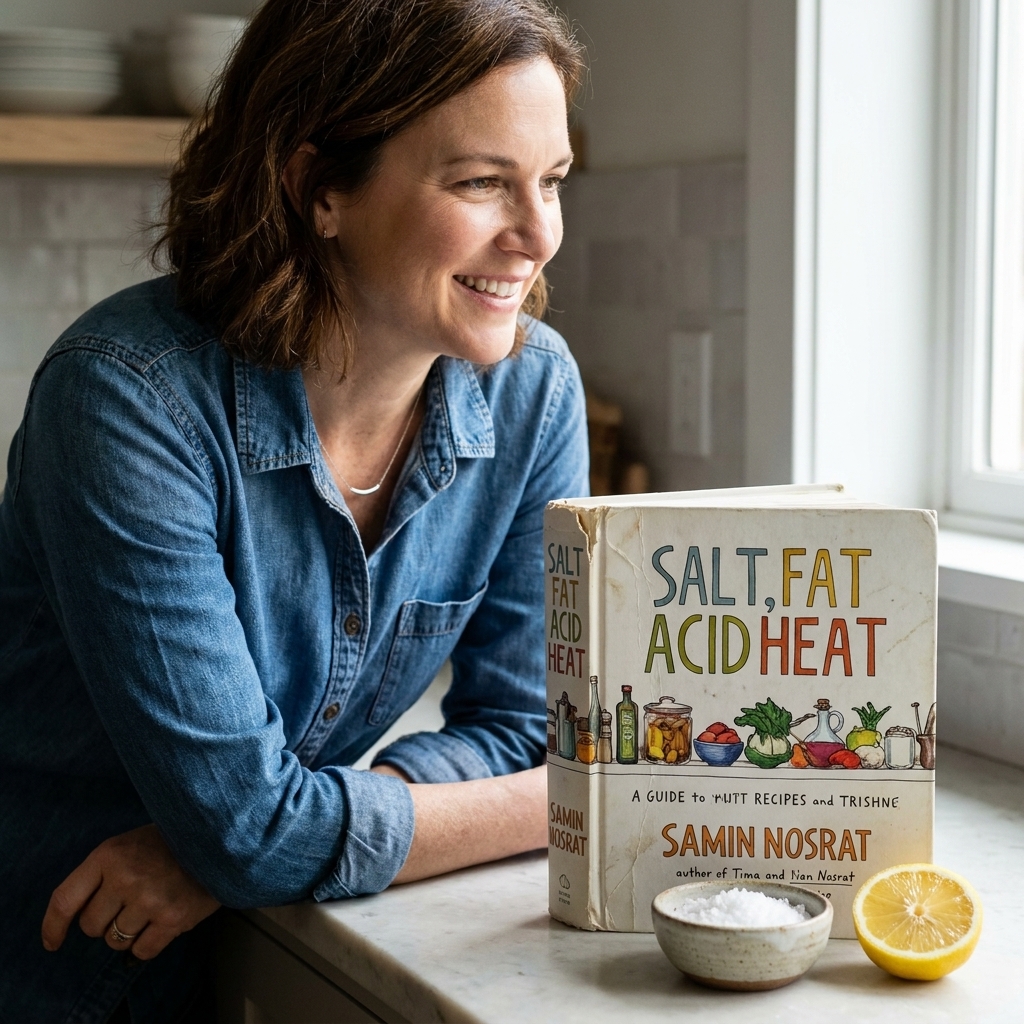
If you buy just one cookbook that makes you a better cook across the board, make it this one. Salt, Fat, Acid, Heat is not a list of recipes so much as a friendly, confidence-building lesson in how food works. It teaches you how to balance, which is the skill that turns a sad pot of beans into something you want to eat standing over the stove.
Why it stays
- It explains seasoning like a human being. Not just “add salt,” but when, why, and how different salts behave.
- It makes improvising feel safe. You start to see meals as adjustable, not fragile.
- It supports every cuisine. Once you understand the four elements, you can cook more freely from any tradition.
Best for
Beginner to intermediate cooks, anyone breaking out of a recipe rut, and people who want to stop Googling “how to fix bland soup” every winter.
Time and effort
Low barrier, high payoff. You can read a chapter and immediately cook better that week.
If you only cook one thing
Choose a simple braise or a vinaigrette and pay attention to the decision-making. The point is not the dish. The point is the new reflexes you build.
2) Staples: The New Best Recipe
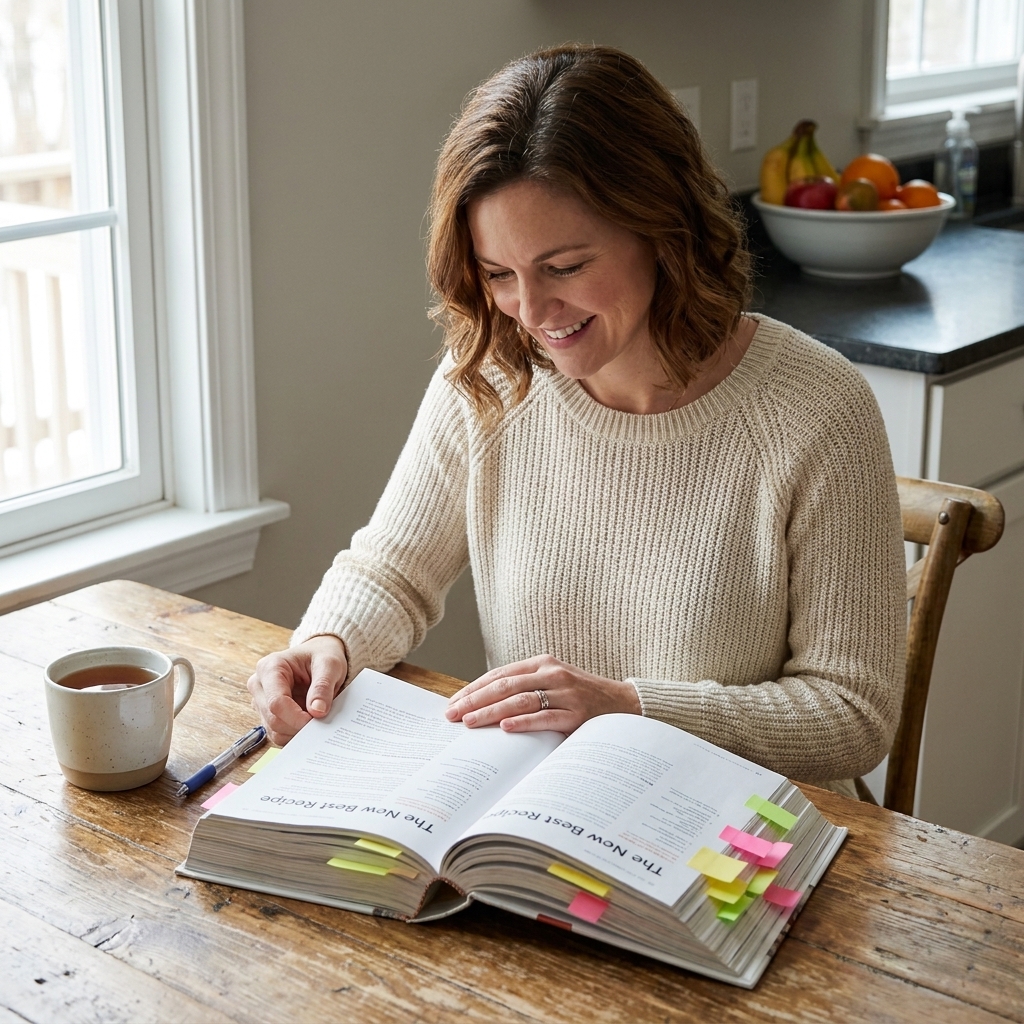
Every minimalist shelf needs one book that acts like your calm, hyper-competent friend who already tested the recipe six different ways so you do not have to. That is the role The New Best Recipe (Cook’s Illustrated / America’s Test Kitchen) plays beautifully. It is not trendy. It is not precious. It is thorough, practical, and relentlessly focused on results.
Title clarity: The two common versions you will run into are The Best Recipe (1999) and The New Best Recipe (2004). Either one can fill this slot. Pick the edition you can actually find and will actually use.
These books tend to show you what went wrong in testing and why the final method works, which makes it a quiet technique teacher too. It is how a lot of people learn to roast chicken, make a pot of chili that behaves, or bake cookies that come out the same way twice.
Why it stays
- Dependable classics. The backbone dishes you will cook again and again.
- Clear explanations. You learn what to look for, not just what to do.
- Wide coverage. Soups, braises, pastas, salads, sides, and simple desserts.
Best for
Home cooks who want fewer surprises, families who rely on repeatable staples, and anyone who likes a recipe that has been stress-tested.
Time and effort
Mostly weeknight-friendly, with a few weekend projects. The clarity makes it feel easier than it looks.
Minimalist note
If you already own a big “everything” cookbook you genuinely use weekly, keep it. But if it is collecting dust because it is vague or inconsistent, replace it with a dependable anchor like this.
3) Baking: CIA Baking and Pastry
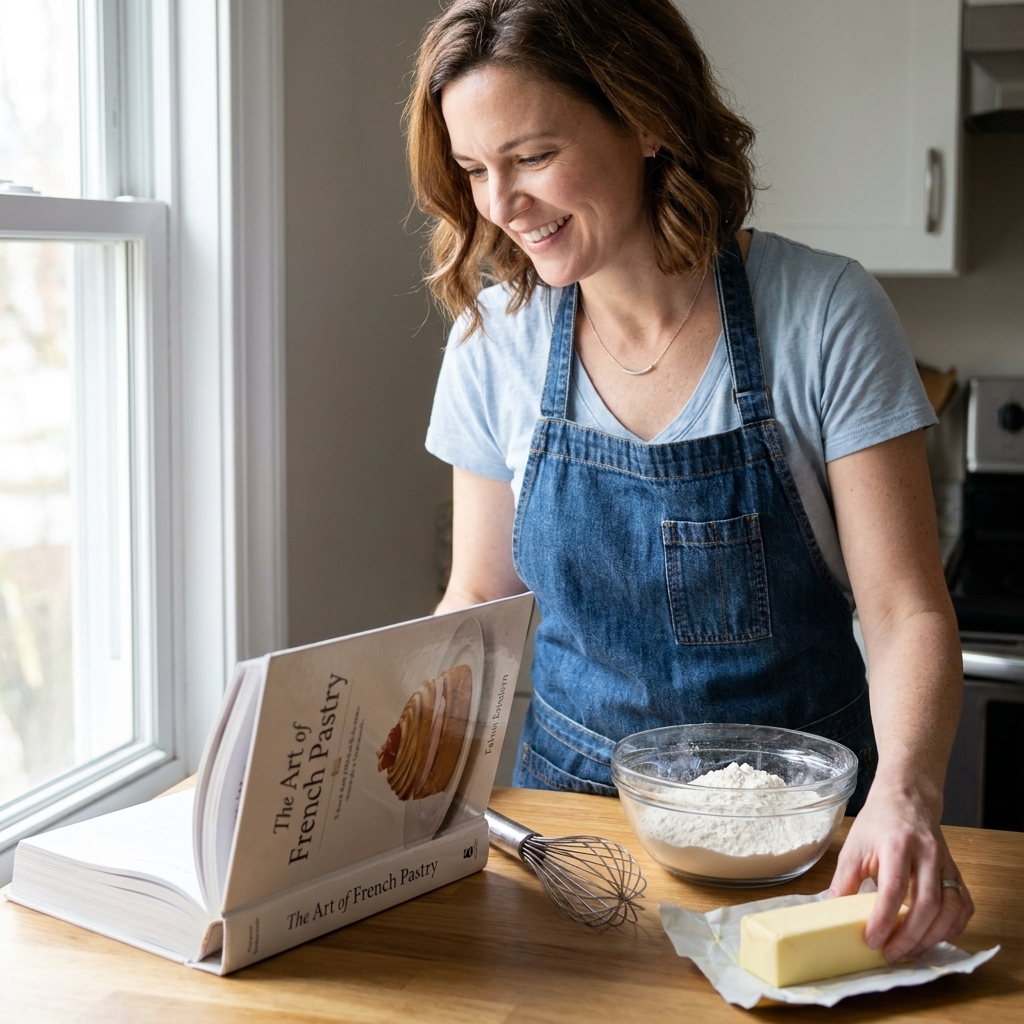
Minimalism does not mean you skip dessert. It means you stop buying five different baking books that each do one narrow thing and instead keep one reference that teaches you the structure underneath cakes, custards, breads, and laminated doughs.
The Culinary Institute of America’s Baking and Pastry is the book I reach for when I want to understand ratios, methods, and the “why” behind a technique. It is more textbook than bedtime read, but it pays you back for years.
Edition note: The CIA has released multiple editions and similarly named volumes over the years. Look for the Culinary Institute of America as author and choose the most recent edition you can comfortably afford or borrow, since updates tend to improve clarity and keep the techniques current.
Why it stays
- Foundational skills. Mixing methods, gluten development, fermentation, temperature control.
- Reliable formulas. Once you understand the base, you can riff confidently.
- Broad coverage. Breads, cookies, cakes, plated desserts, creams, pastries.
Best for
Anyone who bakes even occasionally and wants consistent results, plus cooks who enjoy learning technique the way you might learn a craft.
Time and effort
Higher. This one rewards slow, curious reading and a few practice runs. It is also physically large, so it is best as your one “big reference” book.
If you want a smaller option
If the CIA book feels too hefty for your life right now, a strong alternative is King Arthur Baking Companion. For a minimalist shelf where one baking book has to cover the most ground, the CIA volume still earns its keep.
4) Global flavor: The Wok
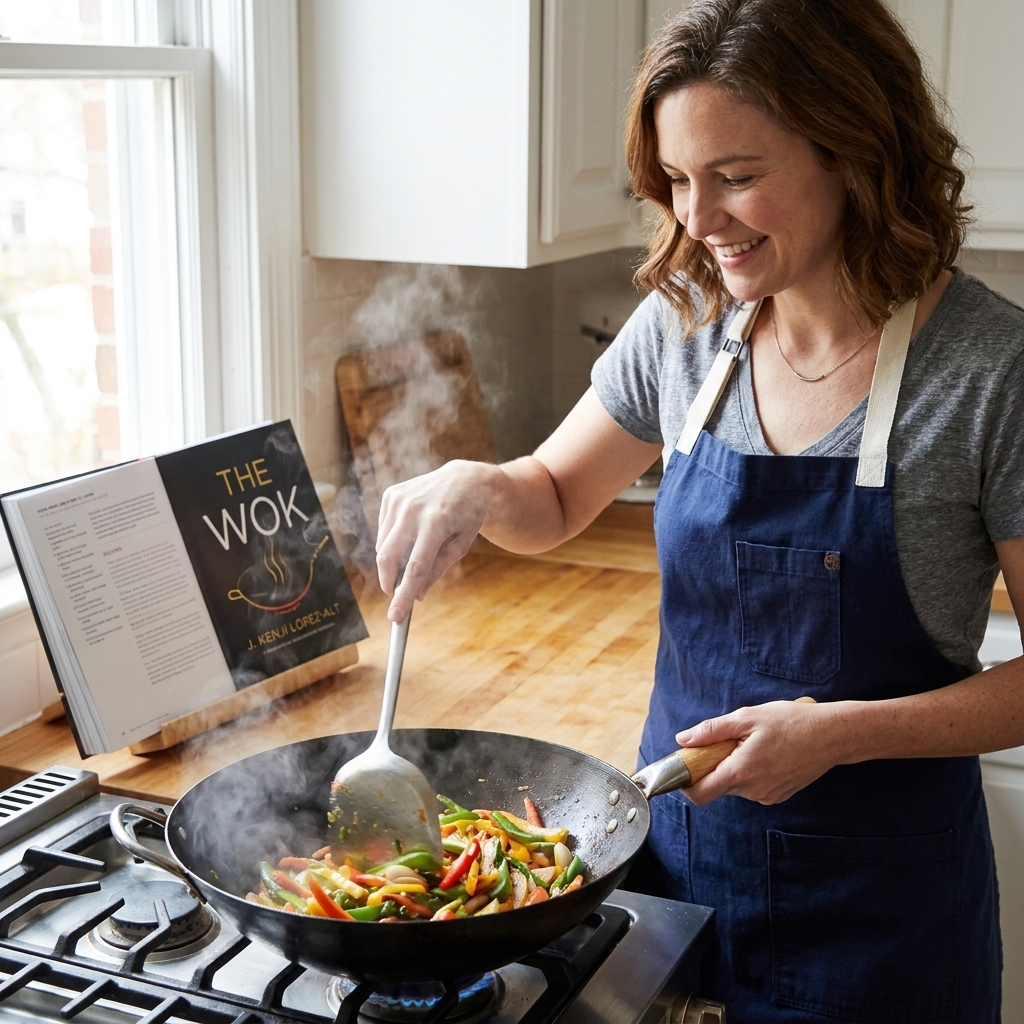
If you have ever wished you could make takeout-night food that tastes alive and punchy, The Wok by J. Kenji López-Alt is a small revelation. Yes, it centers on the wok, but it is really a book about high-heat cooking, smart pantry building, and learning the logic behind sauces, stir-fries, noodles, fried rice, and more.
For a minimalist library, this book does something precious: it expands your everyday repertoire without requiring you to buy a separate cookbook for each cuisine or region you are curious about.
Why it stays
- Technique-first. Heat management, prep strategy, and ingredient swaps.
- Pantry guidance. What is worth buying, what can be substituted, what lasts.
- Weeknight friendly. Many recipes are fast once you get your rhythm.
Best for
Curious cooks, anyone who loves big flavor quickly, and people bored with the same rotation of sheet-pan meals.
Time and effort
Moderate upfront. Once you build the pantry and learn the flow, it becomes genuinely quick.
If you do not own a wok
You can still use the book. A carbon steel skillet, cast iron skillet, or wide sauté pan will get you most of the way there. Expect slightly less smoky char on some stoves, especially electric or induction, and focus on smaller batches and good preheating.
5) Seasonal cooking: Six Seasons
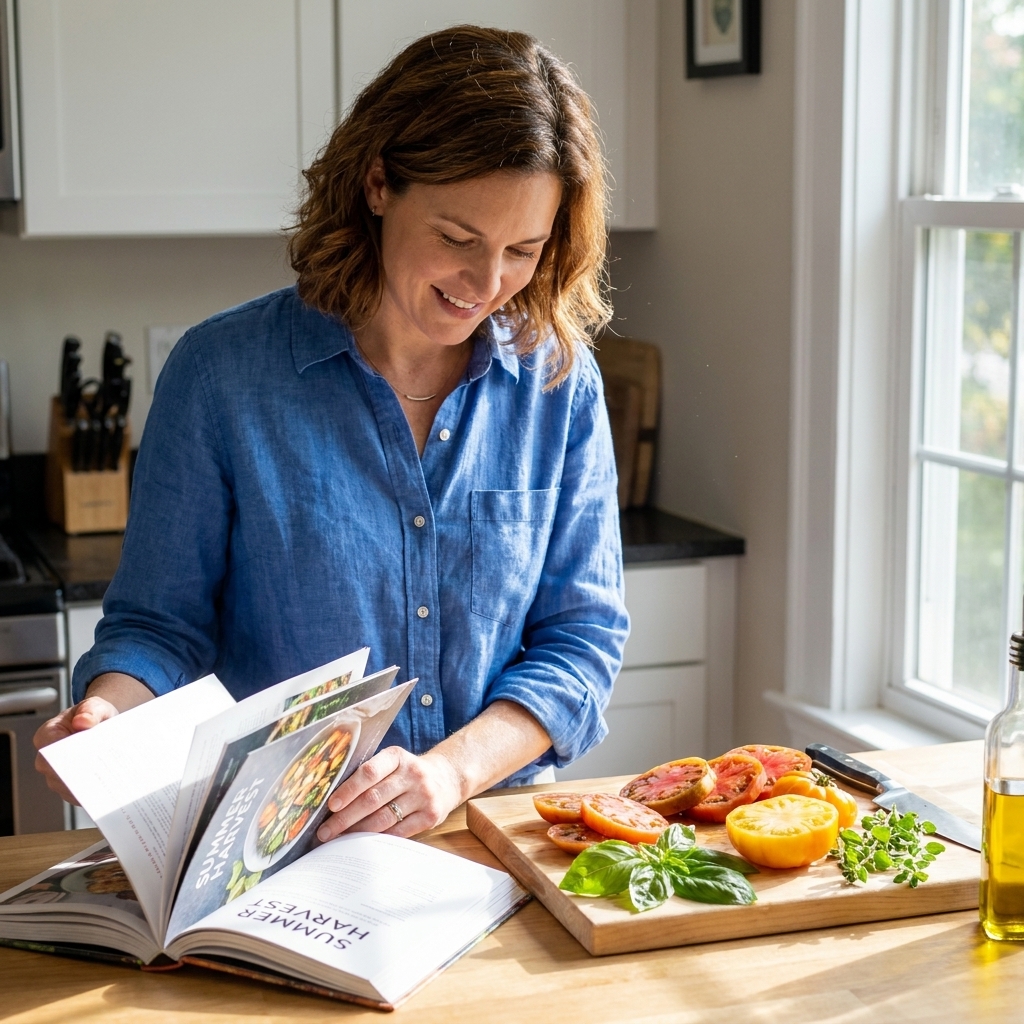
A minimalist shelf can accidentally become a little utilitarian. All competence, no romance. That is why you need one book that makes you want to cook, especially when the farmers market is showing off and your kitchen feels like a place you would like to spend time.
Six Seasons by Joshua McFadden with Martha Holmberg is vegetable-forward without being preachy. It follows produce through its arc, from tentative early-season asparagus to late-summer tomatoes that taste like a plot twist. The recipes are vibrant and modern, but still doable for real life.
Why it stays
- Teaches seasonality in a practical way. You learn what to do with what is abundant now.
- Makes vegetables the main event. Helpful for budgets and health without feeling like homework.
- High inspiration. You will flip through it like an art book and then actually cook from it.
Best for
CSA members, gardeners, market regulars, and anyone who wants their dinners to feel more like a treat than a task.
Time and effort
Weeknight-to-weekend range. Many recipes are simple, but the book encourages you to buy good produce and let it shine.
How to declutter to five
I have helped a lot of customers (and friends, and my own sentimental self) pare down shelves. Here is the method that avoids the classic mistake of donating the book you only realize you need when it is gone.
Step 1: Pull everything out
Yes, all of it. Put it on the table so you can see your habits in physical form.
Step 2: Make three piles
- Reference and repeaters: books you truly cook from or learn from.
- Sentimental keeps: inherited, signed, or deeply personal books you are not ready to part with.
- Guests: the impulse buys, the duplicates, the “someday” books.
If you are committed to five, sentimental keeps count toward five. If that feels impossible, consider a separate “memory shelf” away from the working kitchen library.
Step 3: Keep one book per job
Your five should not compete. They should cover different roles: technique, staples, baking, global flavor, seasonal inspiration.
Step 4: Do a one-season test
Not sure about a book? Box it up for three months. If you do not miss it, it is safe to release back into the wild.
Step 5: Budget and access
These books can be an investment. If you are building your shelf slowly, check the library first, then used copies, then consider an ebook for the titles you want searchable. Minimalism is also about not rebuying the same information five different ways.
FAQ
What if I am vegetarian or vegan?
The list above still works, but you can tilt it. Six Seasons is already very plant-friendly. For staples, consider swapping in a plant-based cornerstone like Plenty by Yotam Ottolenghi or Veganomicon by Isa Chandra Moskowitz and Terry Hope Romero, depending on how you cook at home.
What if I cook mostly from the internet?
Totally fair. The internet is great for a specific craving. Cookbooks are great for building a coherent internal compass so you can cook without chasing ten tabs. Even if you only keep five, you will reach for them when decision fatigue hits.
Should I keep old community cookbooks?
If they are meaningful to you, yes. Community cookbooks are social history you can eat. But if the goal is a working minimalist shelf, consider storing them somewhere safer than the splatter zone and keeping your five daily drivers within arm’s reach.
How do I choose between editions or similar titles?
Pick the one you trust. The one with pages that naturally fall open. The one you have actually cooked from. In a minimalist library, use is the highest form of praise.
Where to start
If you are building from scratch: start with Salt, Fat, Acid, Heat plus one dependable staples book. Then add baking, global flavor, and seasonal inspiration as your cooking life asks for them.
A final note
Minimalism is not about proving you can live with less. It is about making space for what you actually return to. These five cookbooks are not a checklist for real cooks. They are a small, sturdy set of companions. The kind that quietly teach you over time, then sit back and let you take the credit when dinner tastes like you meant it.
If you want, tell me how you cook and what you reach for on a typical weeknight, and I can help you tailor the five to your kitchen and your life.