Graphic novels are a little like pastries: they look sturdy until you realize how quickly they pick up fingerprints, sunlight, and that one mysterious shelf scuff that seems to appear overnight. The good news is you do not need a museum budget to keep your collection in beautiful, readable shape. You just need a few smart habits and a storage setup that works with the materials these books are actually made of.
Quick note on terms: I am using “graphic novels” as a catch-all for collected editions (trades), hardcovers, and other bound comics. Single issues have their own bag-and-board lifestyle, but most of the habits below still help.

Below is my bookstore-manager, cat-owner, thrift-shopper approach: practical, gentle, and designed for people who want to read their comics, not entomb them.
Know your biggest enemies
Most wear on graphic novels is not dramatic. It is slow, repetitive stress plus a few environmental culprits. If you tackle these, you handle the majority of preservation.
- Sunlight: Fades spines and covers, especially bright inks and matte coatings.
- Humidity swings: Can warp covers, ripple pages, and invite mold.
- Heat: Can soften adhesives and accelerate yellowing.
- Dust and skin oils: Dull glossy covers and grind into edges over time.
- Gravity and pressure: Causes spine lean, rounded corners, and cover curl when shelving is too tight or too loose.
- Pests: Silverfish, booklice, and even roaches love paper, glue, and the quiet corners behind shelves. If you are in a humid home, check occasionally for tiny “pepper” droppings, shed skins, or nibble marks, and keep the area clean and dry.
Set up a spine-friendly storage zone
Choose the right shelf location
The best spot is boring in the best way: cool, dry, and stable.
- Keep shelves away from direct window light. If you cannot, add UV-filtering curtains or window film and rotate which books get light exposure.
- Avoid placing shelves directly over or next to radiators, baseboard heaters, or HVAC vents. That kind of fluctuating heat is rough on glue bindings and can dry covers unevenly.
- Avoid storing in attics, garages, or basements unless they are climate-controlled.
- Give books a little breathing room from exterior walls that get cold or damp.
Stand them upright, supported, and not overpacked
For most bound graphic novels and trades, upright shelving is ideal.
- Support the row: Use bookends so books do not slouch into a permanent lean. Leaning puts long-term stress on the spine.
- Not too tight: If you have to pinch and yank to remove a book, you will rub the cover edges and potentially tear the dust jacket.
- Not too loose: If a book falls over when you pull its neighbor, it is going to get corner dings fast.
- Keep series together by height: Mixing tall hardcovers with smaller paperbacks creates pressure points and bowed spines.
When to stack flat (and how)
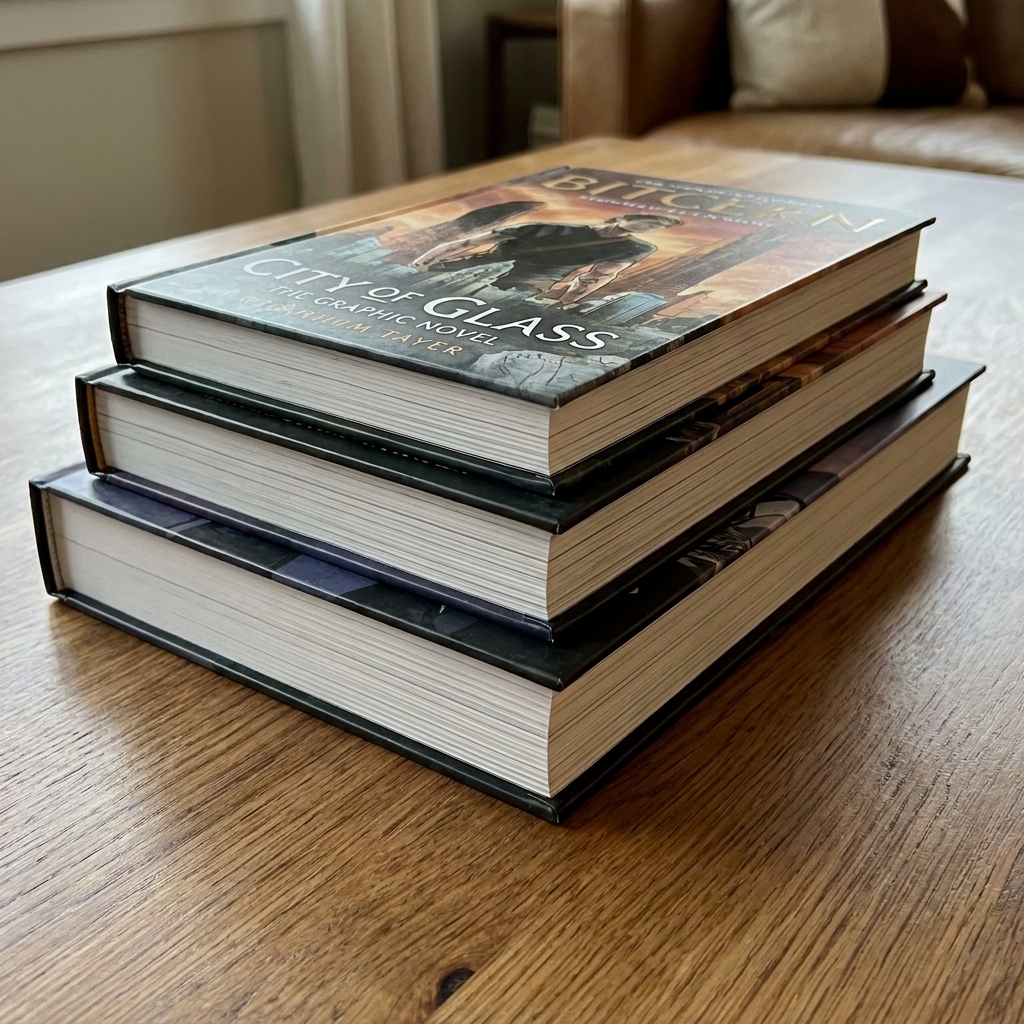
Flat stacking can be good for oversized hardcovers, art-heavy collections, or books with delicate dust jackets, but only if you keep stacks modest.
- Limit stacks to about 6 to 10 books, depending on weight.
- Put the largest, heaviest books on the bottom.
- Avoid stacking in a way that bends covers upward at the edges.
Humidity and temperature
As someone living in a city that loves a moody drizzle, I will say it plainly: moisture is where collections go to get weird.
Target conditions
- Humidity: Aim for around 30 to 50 percent relative humidity, and try to avoid big swings.
- Temperature: Comfortable room temp is ideal, and stability matters more than perfection.
Easy upgrades that make a big difference
- Use a small hygrometer: They are inexpensive and take the guesswork out of “is it damp in here?”
- Run a dehumidifier if needed: Especially in rainy seasons or older buildings.
- Improve airflow: Do not press shelves flush against a cold wall if that area tends to sweat in winter.
- Keep books off the floor: Even a few inches helps protect from minor leaks and humidity pockets.
- Be cautious with sealed plastic bins: They can trap moisture. If you use them, add desiccant packs and check humidity inside the bin occasionally.
If a room smells musty, your paper is already negotiating with that environment. Fix the room first, then fuss over the books.
Handling habits
A lot of graphic novel damage happens in the first five seconds of reading: the eager open, the too-far flattening, the snack hand. You can stay cozy and still stay careful.
Pull the book out correctly
- Do not hook a finger over the top of the spine and yank. That frays the headcap and stretches the binding.
- Instead, push the neighboring books back slightly, then grasp the middle of the book (both sides) and slide it out.
Open it gently, especially when it is new
- For paperbacks: avoid forcing the book flat. Let it curve naturally.
- For hardcovers: do not press down on the hinge. Support both covers with your hands as you read.
Bookmarks, not dog-ears
Dog-ears in comics are like creasing a poster. Use a bookmark, a clean index card, or even a receipt you are emotionally ready to part with.

Cleaning
Cleaning should be gentle and infrequent. Think “remove dust and fingerprints,” not “deep scrub.”
Basic dusting (monthly or as needed)
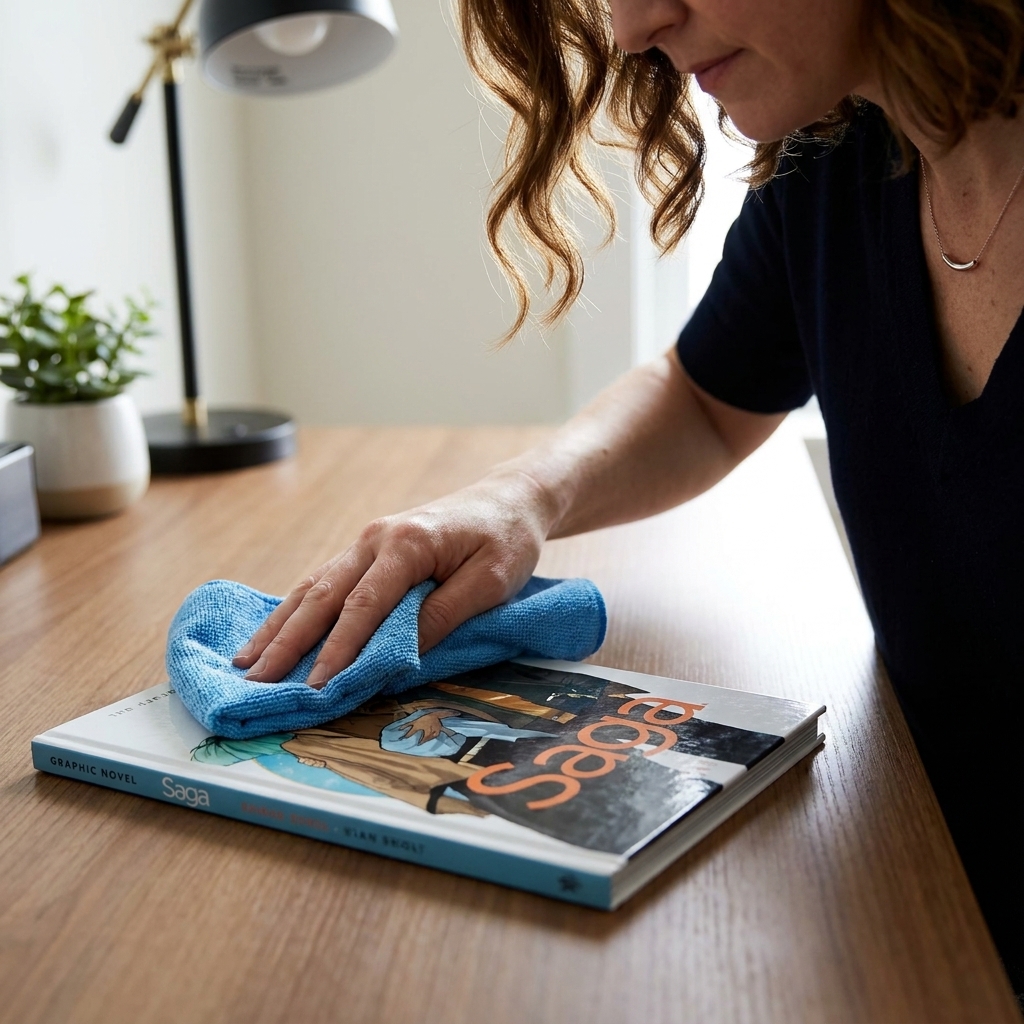
- Use a soft, clean microfiber cloth for cover surfaces.
- Dust the top edges of the books and shelves. That is where grime likes to settle.
- Work with dry tools first. Water is a last resort around paper.
Fingerprints on glossy covers
Glossy laminate shows every touch. For light smudges:
- Use a dry microfiber cloth, gently buffing in small circles.
- If needed, very lightly dampen a corner of the cloth with distilled water, then immediately dry with a clean section. Keep moisture away from page edges and corners.
Scuffs on matte or soft-touch covers
Matte finishes are gorgeous and also tragically honest. They can “polish” in spots if you rub too hard.
- Start with a clean, dry microfiber cloth.
- Use minimal pressure. If it does not lift, accept a little character rather than damaging the finish.
What not to use
- Household cleaners, disinfecting wipes, alcohol sprays, or anything citrus-based.
- Rough paper towels. They can be abrasive, leave lint, and catch corners or jacket edges. If you are blotting a spill, use smooth blotting paper or clean, unprinted plain paper first.
- Erasers on printed areas. They can lift ink and leave shiny patches.
Protective covers and sleeves
Not every graphic novel needs to be bagged like a collectible single issue, but protection is helpful for books that are frequently handled, shelved in a tight space, or have finishes that scuff easily.
Dust jackets
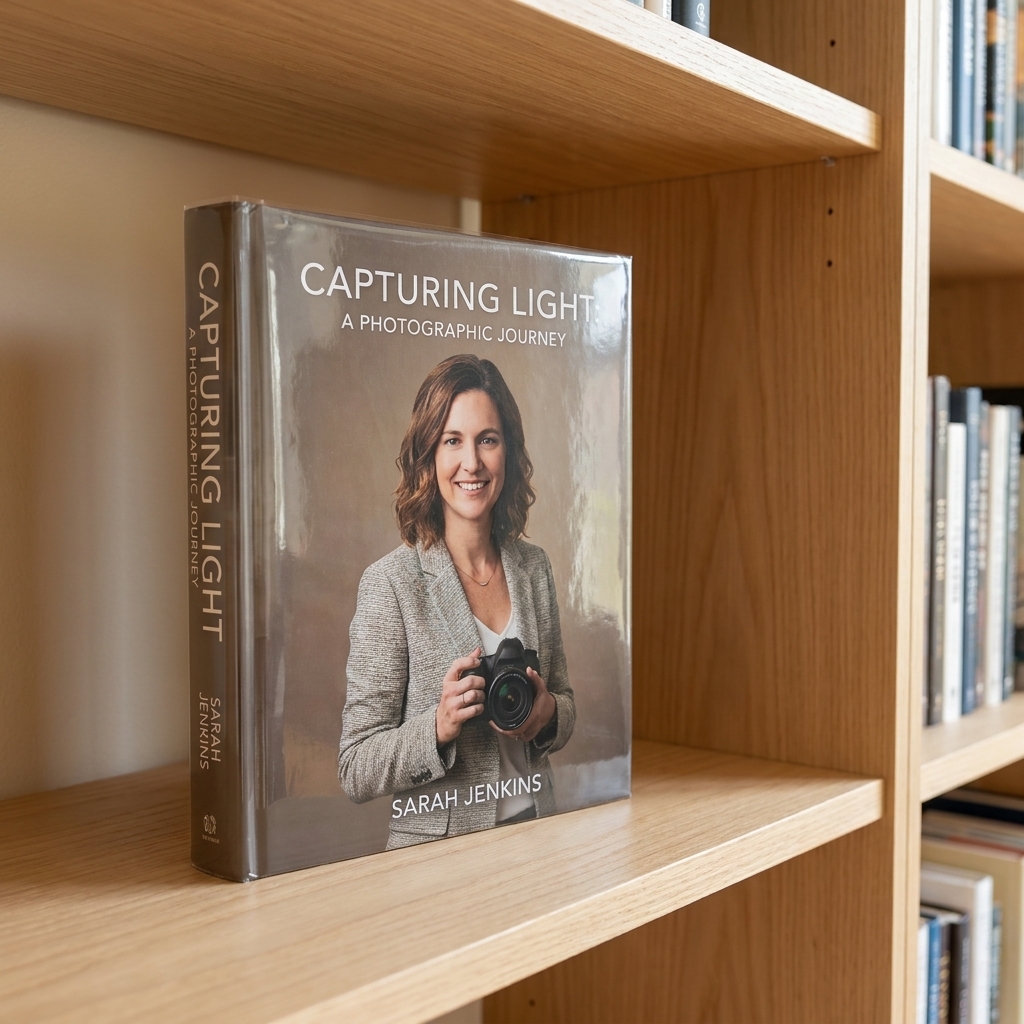
If you collect hardcovers with dust jackets, a clear dust-jacket cover can save you from edge tears and rubbing.
- Look for archival, acid-free, non-PVC covers (often polypropylene or Mylar/Melinex).
- Avoid tight folds that crease the jacket. Fit should be snug, not stressful.
Bagging trades and paperbacks
For paperbacks that travel in backpacks or get reread constantly, a clear sleeve can prevent corner dings and cover wear.
- Choose non-PVC bags or sleeves labeled archival.
- Do not seal books in a way that traps moisture. If your home runs humid, focus on dehumidifying first.
Boards and backing for softcovers
Backing boards are common for floppy comics, but they can also help some thin trades stay crisp.
- Use acid-free boards sized so they do not bend or protrude.
- Do not overstuff a bag so the book is under constant pressure.
Extra storage materials (simple, not fussy)
- For special books, consider acid-free boxes or slipcases to reduce light and dust exposure.
- Avoid rubber bands, sticky notes on art pages, and pressure-sensitive tape. They age badly and leave residue.
Yellowing and edge wear
Some aging is normal. Paper is going to paper. But you can slow the speed of it.
- Keep books out of sun: UV is the biggest accelerator of fading and yellowing.
- Control air quality: Smoke and cooking grease settle onto edges. If you display books near a kitchen, wipe shelves more often.
- Store upright and square: Edge wear increases when books tilt and scrape each other.
- Use slipcases for special editions: They protect edges from light and dust, especially for deluxe hardcovers.
Travel and lending
I love lending books. I also love getting them back in the same shape. You can have both.
For commuting
- Slide the book into a clean sleeve or a large zip pouch.
- Pack it flat against a rigid surface (like a laptop compartment) to prevent corner curls.
- Keep it away from water bottles and leaky pens, the natural predators of paper.
For lending
- Hand over a bookmark with the book. It is a subtle nudge.
- If it is precious, lend a sturdier edition and keep the fancy one home.
Quick rescue
Spilled water
- Stand the book upright, slightly fanned, in a well-ventilated area.
- Blot, do not rub. Use blotting paper or clean, unprinted plain paper placed between covers and the first few pages. Paper towels can work in a pinch, but they can leave texture or shed fibers, so treat them as a last resort.
- Change the interleaving sheets frequently.
- If pages are soaked or the book is valuable, consider consulting a professional conservator rather than experimenting.
Wavy pages from humidity
- Stabilize the room humidity first.
- Once the environment is steady, press the book under light, even weight between clean boards for a few days. Avoid over-compressing, especially with glossy pages that can stick if there is any moisture.
Mold concerns
If you see fuzzy spots or smell strong mustiness:
- Isolate the book from the rest of the collection.
- If you need to handle it, protect yourself. Wear gloves and a well-fitting mask, and do not start flipping through it in your living space.
- Do not try to wipe mold with a wet cloth. That can spread spores.
- If the book is sentimental or expensive, seek professional advice. Your health matters more than a first printing.
Simple maintenance routine
If you want a low-effort rhythm that actually sticks, here is one I recommend to anyone trying to keep a collection looking sharp without turning it into a second job.
- Weekly: Keep drinks off the same surface as your reading pile. Tiny habit, huge payoff.
- Monthly: Dust shelves and the tops of spines, then spot-clean fingerprints on glossy covers. Take ten seconds to peek behind shelves for any pest activity if you live somewhere damp.
- Seasonally: Check humidity, rotate any books getting light exposure, and tighten up leaning rows with bookends.
- Annually: Reassess what needs extra protection (jacket covers, sleeves, slipcases) based on what you actually reread.
FAQ
Should I store graphic novels vertically or horizontally?
Most are happiest stored upright, like regular books, as long as they are supported and not crammed. Go horizontal for oversized, heavy hardcovers or delicate editions that tend to slump or warp when standing.
Are plastic sleeves safe for books long-term?
They can be, if you choose archival, non-PVC materials (polypropylene or polyester/Mylar). Avoid cheap PVC plastics, which can off-gas and become sticky or cloudy over time.
How do I prevent spine cracks on paperbacks?
Do not force the book flat. Open it gently, support it while reading, and avoid bending the cover backward. Also, store it upright and snug so the spine is not constantly bearing uneven pressure.
Is it okay to use tape to repair a torn cover or dust jacket?
For long-term preservation, household tape is a no. It yellows and the adhesive migrates. If the item is valuable, look into archival repair methods or professional help. If it is a beloved reading copy, you can use a clear dust-jacket cover to stabilize minor tears without sticking anything to the paper.