Art books have a special kind of magic: the weight of good paper, the hush of glossy plates, the way a single spread can nudge your whole mood. The problem is that magic can come with a price tag that makes your wallet whisper, “Absolutely not.”
The good news is you do not need museum-shop money to build a collection you love. With a little patience and a sharp eye, you can find stunning monographs, photography collections, exhibition catalogs, and design classics out in the wild. Consider this your budget-friendly roadmap for starting a shelf that feels like a small, portable gallery.

What makes an art book worth collecting
“Worth it” is wonderfully personal. Some collectors chase first editions and pristine dust jackets. I am here for the books that make you want to cook dinner with one hand while holding the page open with the other, or the ones you keep returning to when you need your brain to unclench.
Start with your why
- You want to learn: Look for survey books, technique-focused titles, and museum catalogs with strong essays.
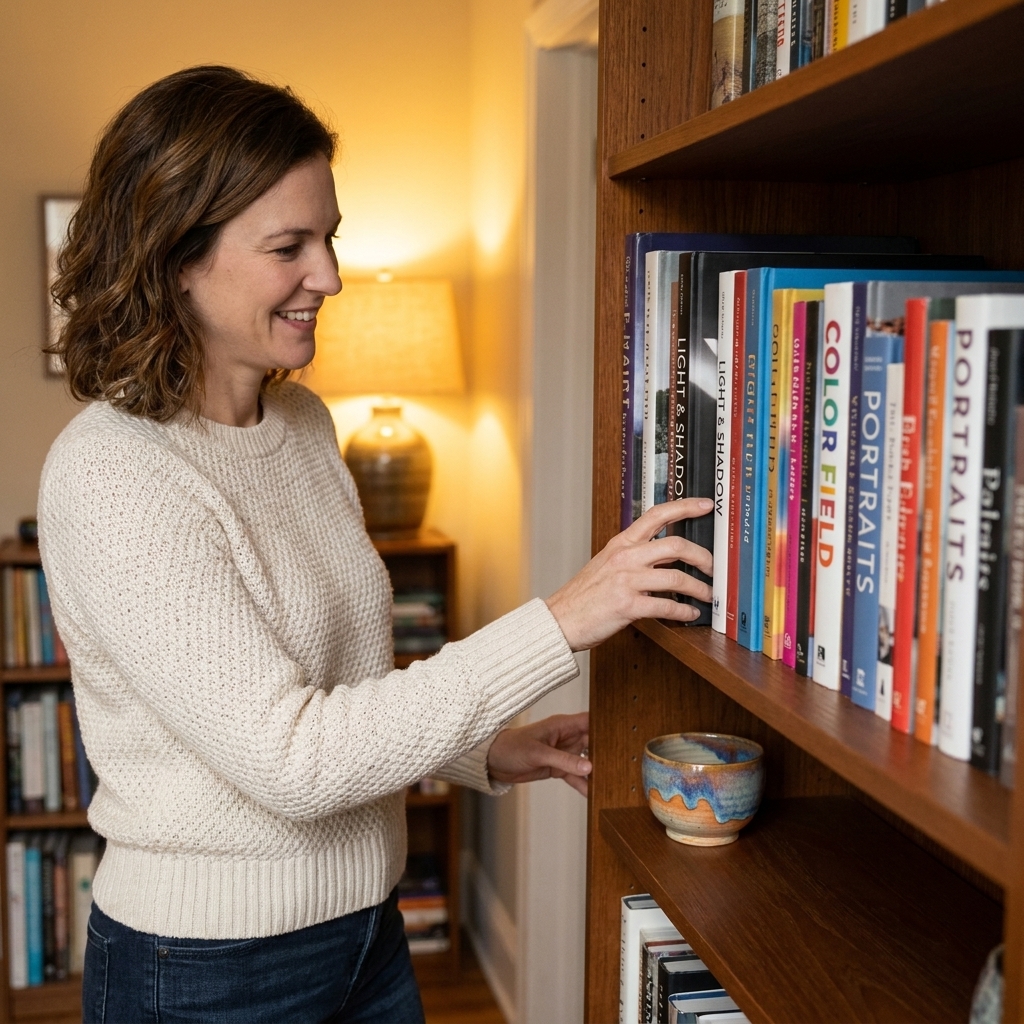
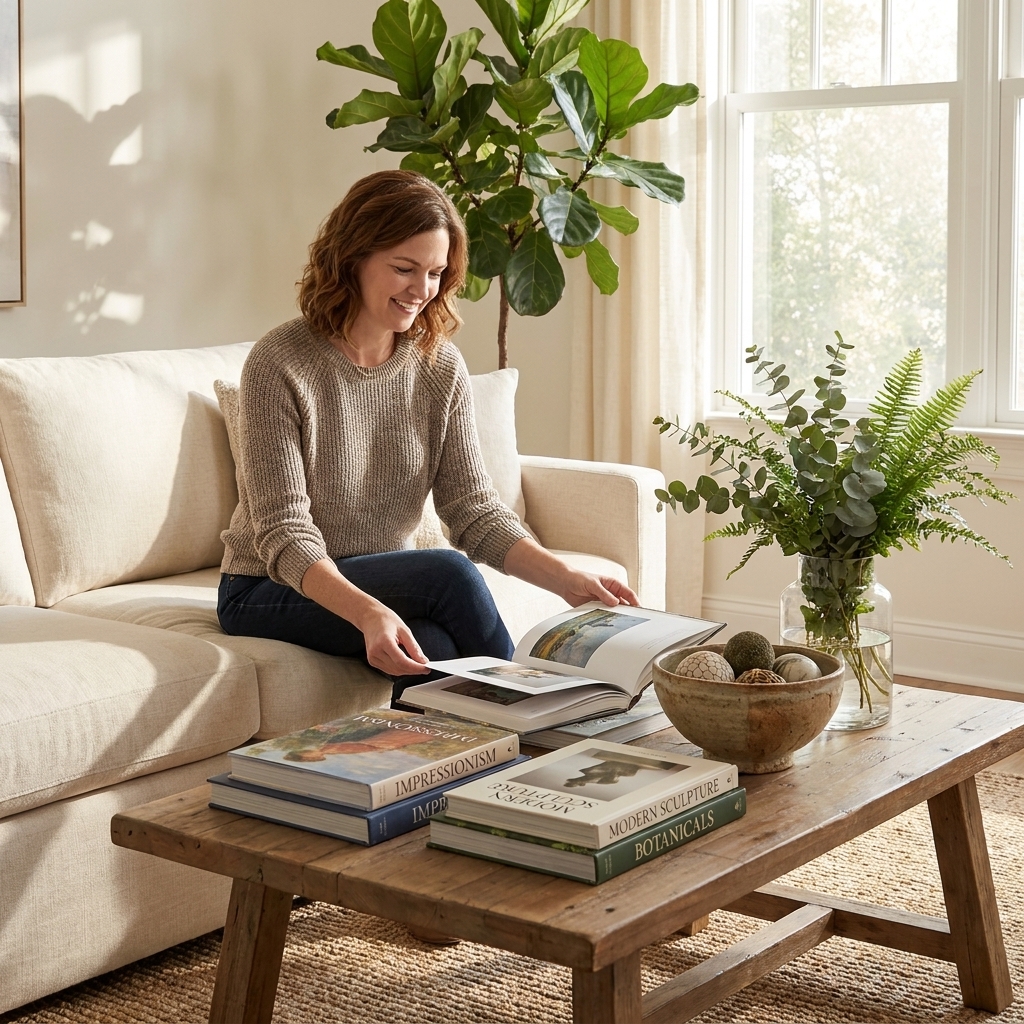
- You want to decorate: Oversize books with bold reproduction and strong spines look gorgeous stacked or shelved face-out.
- You want to build a personal canon: Pick a lane or two: a movement (Bauhaus), a medium (street photography), or a theme (food in art).
Formats that are often undervalued
If you are bargain hunting, these categories can deliver a lot of beauty per dollar:
- Exhibition catalogs: Often scholarly, image-rich, and overlooked at resale shops.
- Publisher series: Compact monographs printed in larger runs that resurface cheaply.
- Library discards: Not always pristine, but frequently excellent and sometimes surprisingly uncommon.
Set a budget that works
A budget is not just a spending limit. It is also permission to walk away without guilt.
Starter rules
- One great book month: Save your budget for a single title you truly love instead of five maybes.
- Price caps by category: For example, $8 max for impulse finds, $20 for a known wishlist title, $35 for a “dream” book in excellent condition.
- Leave room for the unexpected: The best thrift finds are the ones you did not know existed.
Keep a note on your phone with your current budget, wishlist, and a quick list of artists or subjects you always buy. It makes decisions in the aisle much calmer.
Thrift stores
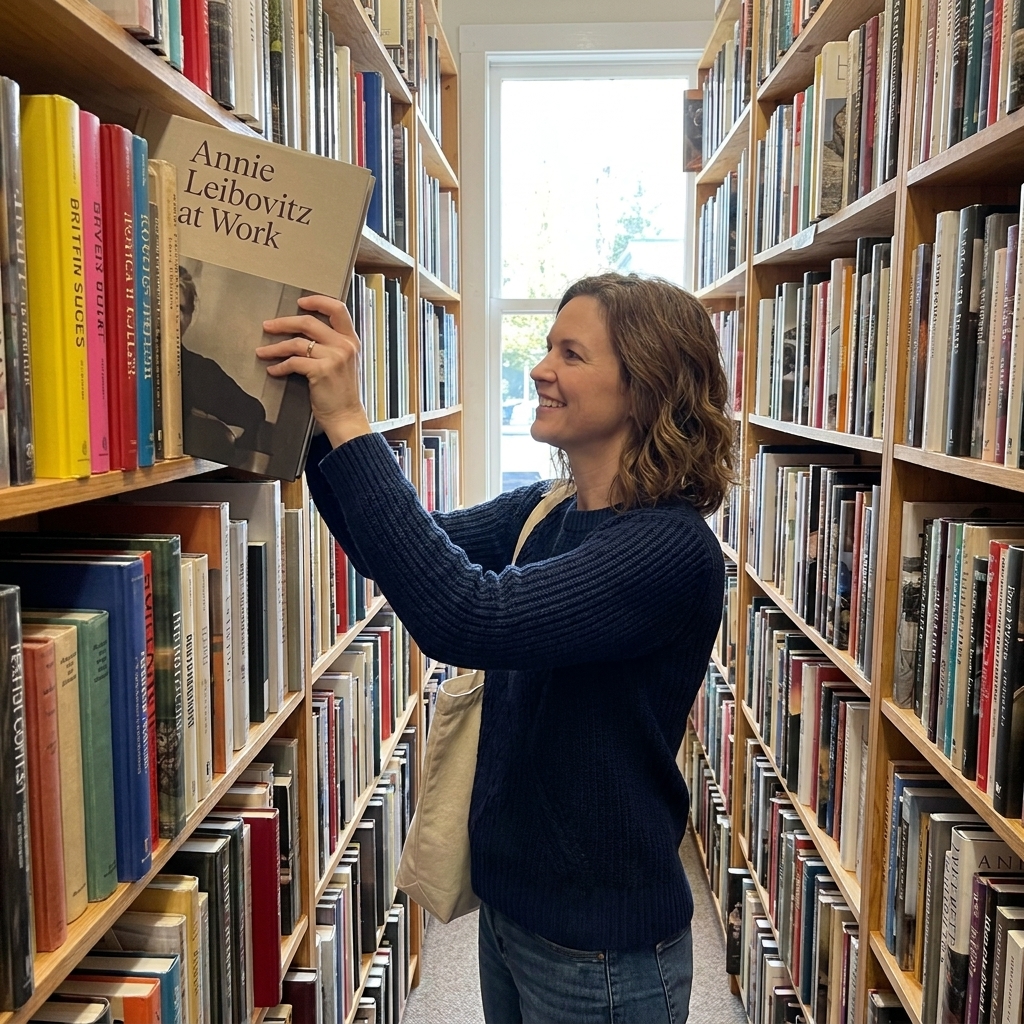
Thrift stores are where art book collecting becomes a practice, not just a purchase. You show up, you browse, you leave empty-handed sometimes, and then one day you find something absurdly beautiful for the price of a fancy coffee.
Where to look
- Oversize shelves: Many stores separate large-format books. Go there first.
- Home and décor: Art-adjacent books get mis-shelved here constantly.
- Cookbooks: Photography-forward food books often hide among the recipe titles.
- Local history: Regional photography books can be quietly fantastic.
Condition check (60 seconds)
- Check the spine: Gently flex the cover. If it cracks sharply or the text block pulls away, skip unless it is extremely special.
- Smell test: A mild old-book scent is fine. Strong mildew is hard to remove, and spores can spread to other books at home.
- Flip the plates: Look for stuck pages, rippling from moisture, and heavy fingerprints on glossy paper.
- Scan the jacket: Missing dust jackets are not a dealbreaker, but they affect value and protection.
Estate sales
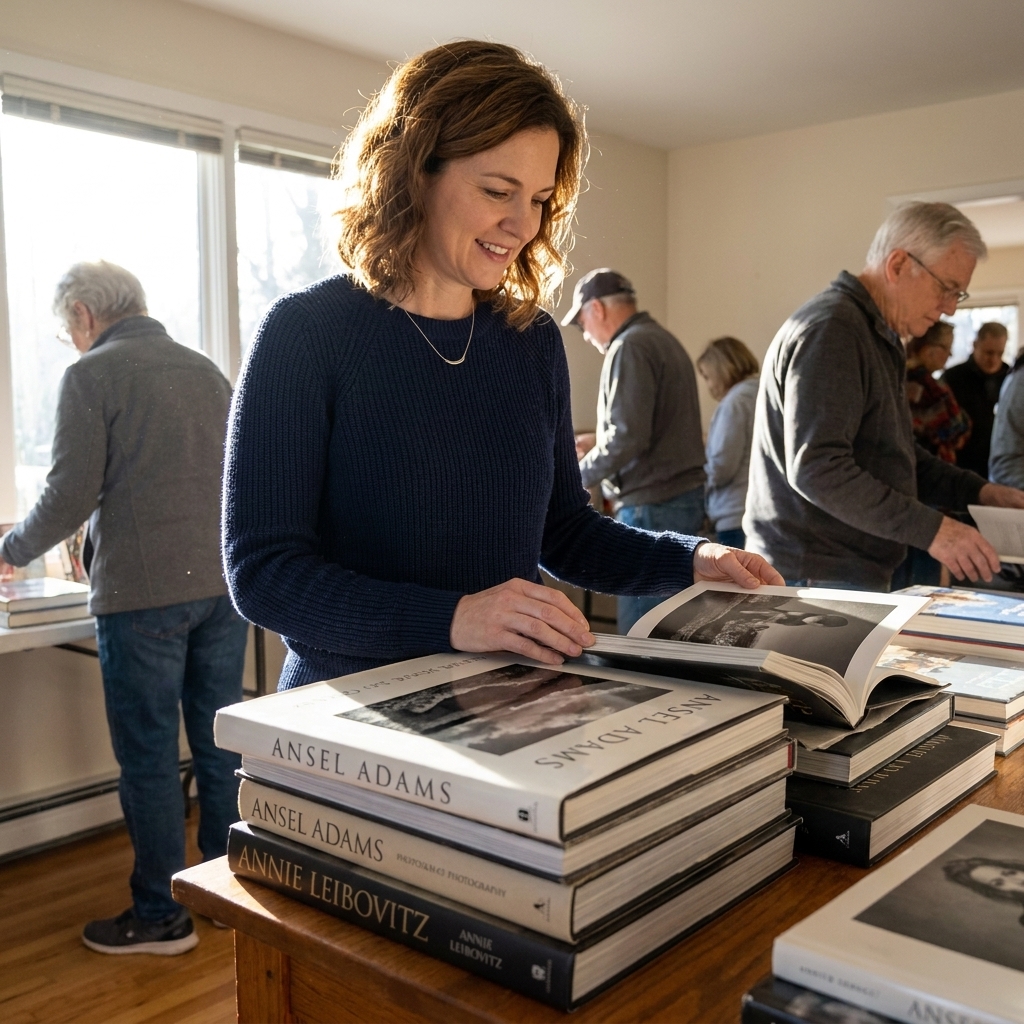
Estate sales can be goldmines because you are browsing someone’s carefully built library, not a random donation bin. The trick is to shop respectfully and strategically.
Before you go
- Bring a tote and a tape measure: Some art books are truly shelf-eating beasts.
- Bring clean hands: Lotion and glossy pages are not friends.
- Know your instant-yes subjects: When it is crowded, you want fast decisions.
How pricing works
Many estate sales discount on the final day, but art books can disappear early. If you see something you love at a fair price, it can be worth buying sooner rather than gambling for a discount later.
Polite negotiation
- Bundle: “Would you take $30 for these three?” is often received better than haggling over a single book.
- Point out condition issues kindly: loose binding, missing jacket, staining.
- Ask about the rest of the library: sometimes there are boxes not yet brought out.
More budget sources
If you want more places to hunt (with less randomness than thrift shelves), add these to your rotation:
- Used bookstores: Especially the art, architecture, and photography shelves, plus the clearance carts.
- Library book sales: Friends of the Library sales are often stacked with donations, discards, and surprisingly good catalogs.
- Museum shop clearance: The sale table can be the best part of the shop if you are patient.
- Art school sales: End-of-term sales and studio cleanouts can include excellent reference books.
- Warehouse and publisher sales: If a local distributor runs an annual sale, it is worth showing up early.
Online discount shopping
Online can feel less romantic than a dusty thrift shelf, but it is fantastic for filling gaps: the photographer you cannot stop thinking about, the design reference you keep borrowing, the museum catalog you regret not buying.
Where deals show up
- Remainder and overstock listings: These can be brand new books at deep discounts.
- Used marketplaces: Great for out-of-print titles, but condition descriptions matter a lot.
- Library and charity storefronts: Often conservative grading and fair prices.
Avoid disappointment
- Read condition notes like a detective: “Acceptable” can mean anything from “fine” to “held together by hope.”
- Confirm edition and size: Some titles have multiple printings, translations, or smaller reissues.
- Watch shipping costs: Oversize books can come with sneaky postage that erases the bargain.
- Ask for photos when possible: Especially for books with dust jackets or special bindings.
Quality tells
Art books are sensory objects. When you are collecting on a budget, a few quick “tells” help you spot quality fast.
Paper and printing
- Paper feel and opacity: Heavier paper often feels more luxurious and can reduce show-through. Reproduction quality still depends on printing, coatings, and color work.
- Color and detail: Watch for muddy shadows, blown highlights, or odd skin tones. Those can signal weaker reproduction or a cheaper printing.
- Matte vs glossy: Matte can feel elegant and reduces glare. Glossy can make photographs sing. Neither is “better,” but very cheap glossy paper can look plasticky.
Binding basics
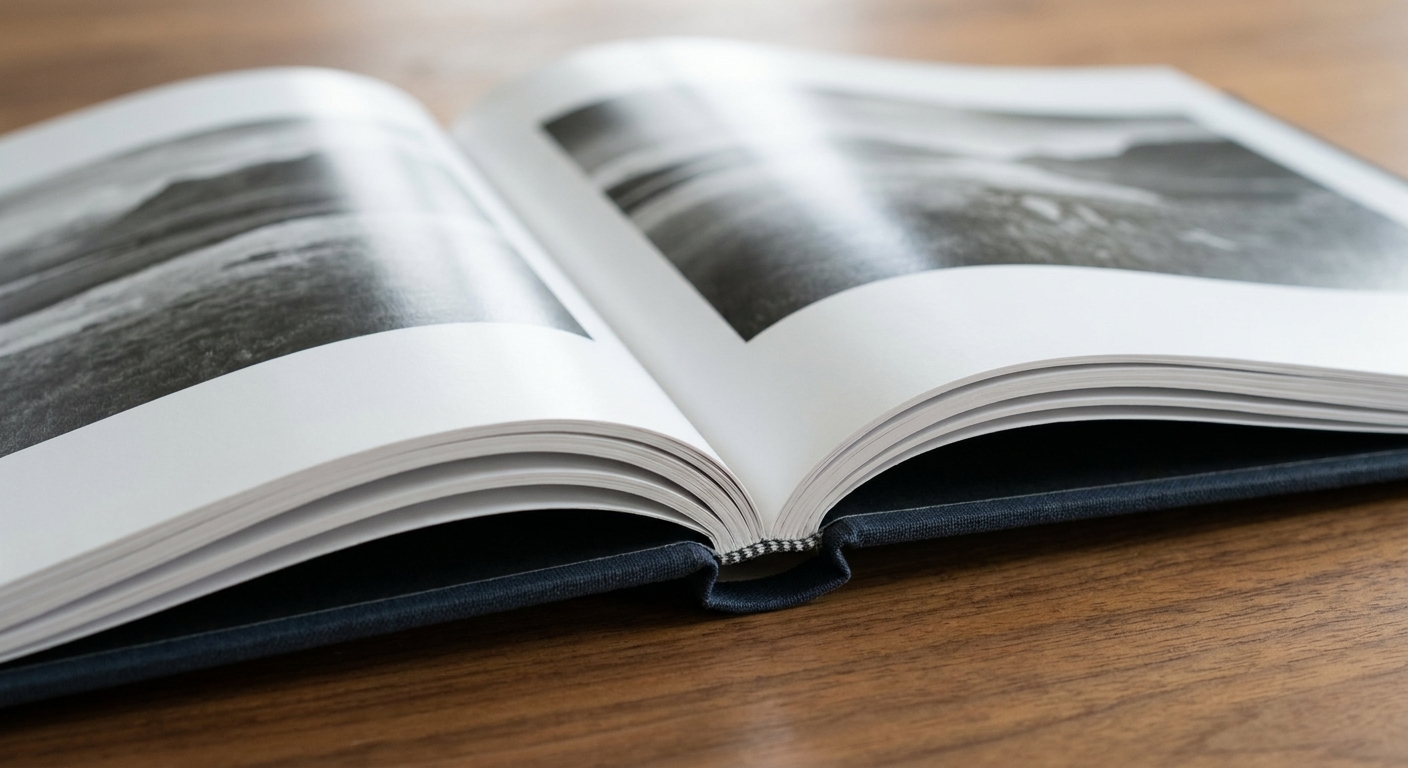
- Sewn bindings: Often open flatter and last longer.
- Perfect bindings (glued): Common in paperbacks and some catalogs, fine when done well, but more likely to crack with age, especially with frequent opening.
- Lay-flat bindings: A joy for image-heavy spreads, and a small luxury worth grabbing when discounted.
Edition basics
You do not need to become a rare-book detective, but a quick edition check can save you money and confusion.
What to check fast
- Publication year: A later reprint might be cheaper and perfectly wonderful for reading.
- Edition notes: Look for “revised edition,” “expanded,” “second edition,” or “facsimile.” These changes can affect content and value.
- ISBN and format: Hardback and paperback editions often have different ISBNs and very different resale prices.
- Colophon and printing line: Sometimes you will see “first edition” or a number line that indicates printing. If you care about collectability, this is where the clues live.
Build a collection that feels like you
The most charming art book collections are not the ones that look like a showroom. They are the ones that read like a personality. Give yourself permission to be eclectic. Let a Japanese design book sit next to a 1970s cookbook with gorgeous food photography. Let a contemporary graphic anthology share space with a museum catalog from 1998.
Beginner paths
- One artist, many angles: A monograph, an exhibition catalog, and a book of letters or interviews creates a fuller portrait.
- One medium, many voices: Portrait photography across decades, or printmaking from different regions.
- One theme, unexpected places: Hands, gardens, kitchens, city nights, textile patterns.
If you ever feel stuck, choose a single shelf and give it a “mini exhibition” refresh. Rotating what you display is free and instantly makes your collection feel alive again.
Care and storage
You do not need a climate-controlled library to keep books happy, but art books appreciate a little common sense.
Simple habits
- Store out of direct sun: Sunlight fades spines and jackets quickly.
- Keep them dry: Avoid storing books on the floor, especially near bathrooms or drafty windows.
- Support oversize books: Shelve them flat if they slump or bow upright.
- Protect jackets: If you love them, consider clear protective covers for your favorites.
Smells and dealbreakers
- Mildew or active mold: It is safest to pass. Remediation is difficult, and spores can spread.
- Smoke odor: It can cling for a long time and migrate into nearby books.
- Water damage: Wavy pages, stuck plates, and tide marks often get worse over time.
- Pests: If you see insect frass, tiny holes, or anything that makes you worry about bedbugs, do not bring it home.
For mild thrift-store funk, air the book open in a dry room for a day or two. You can also use a sealed bin with baking soda nearby (not touching the book) for gentle deodorizing.
Hidden gem radar
If you want the thrill of finding something gorgeous for cheap, keep an eye out for these categories. They are frequently donated or undervalued, even when the content is excellent.
- Small museum catalogs: Regional museums and university galleries often produce stellar books.
- Design and typography references: Especially older editions that are still useful and visually rich.
- Art school and technique books: Figure drawing, printmaking, ceramics, textile arts.
- Travel photography from the pre-social era: Thoughtful, slower images that feel like time capsules.
- Food and culinary history titles with strong photography: My favorite crossover category, because narrative lives there too.
FAQ
Are art books a good investment?
Sometimes, but I would not start here for profit. Prices can be unpredictable, and condition matters a lot. Collect first for love and use value, and let any resale upside be a pleasant bonus.
How do I know if an art book is out of print?
If you cannot find it new from major retailers or the publisher, and used copies are scarce or priced high, it is likely out of print. Museum catalogs and small-press monographs often go out of print quickly.
Is a missing dust jacket a dealbreaker?
Not if the price reflects it and you want the book for reading and looking. For collecting value, dust jackets matter, but for personal joy, a jacketless treasure can still be a treasure.
What is the best first art book to buy?
The best first book is the one you cannot stop opening. If you want a practical approach, start with a single subject you already love, then add one wild card title that surprises you.
Next outing challenge
The next time you are at a thrift store, used bookstore, or library sale, give yourself ten unrushed minutes in the oversize section. Pick up five books you would normally skip, flip through them, and notice what makes your brain light up. That is your collecting compass.
Your budget collection will not look like anyone else’s, and that is the point. It should feel like your own little portable gallery, one lucky find at a time.