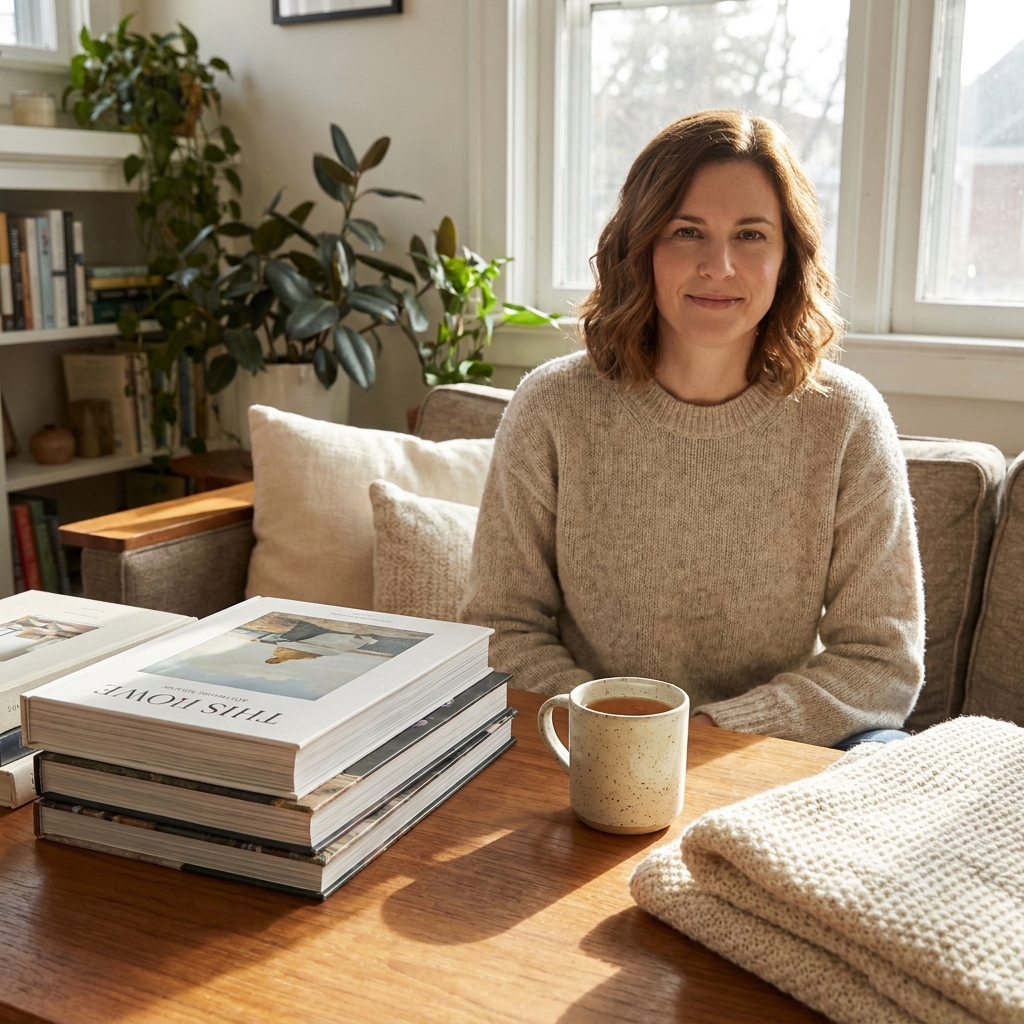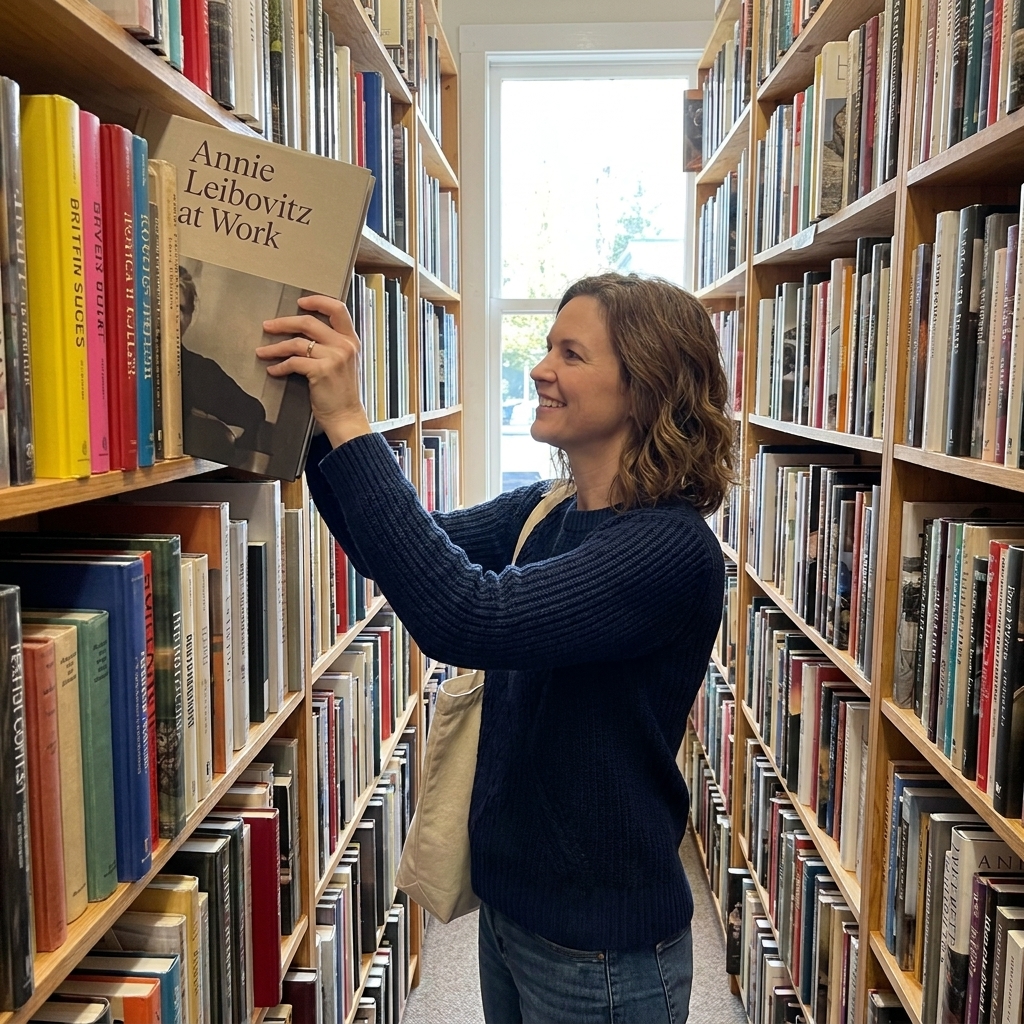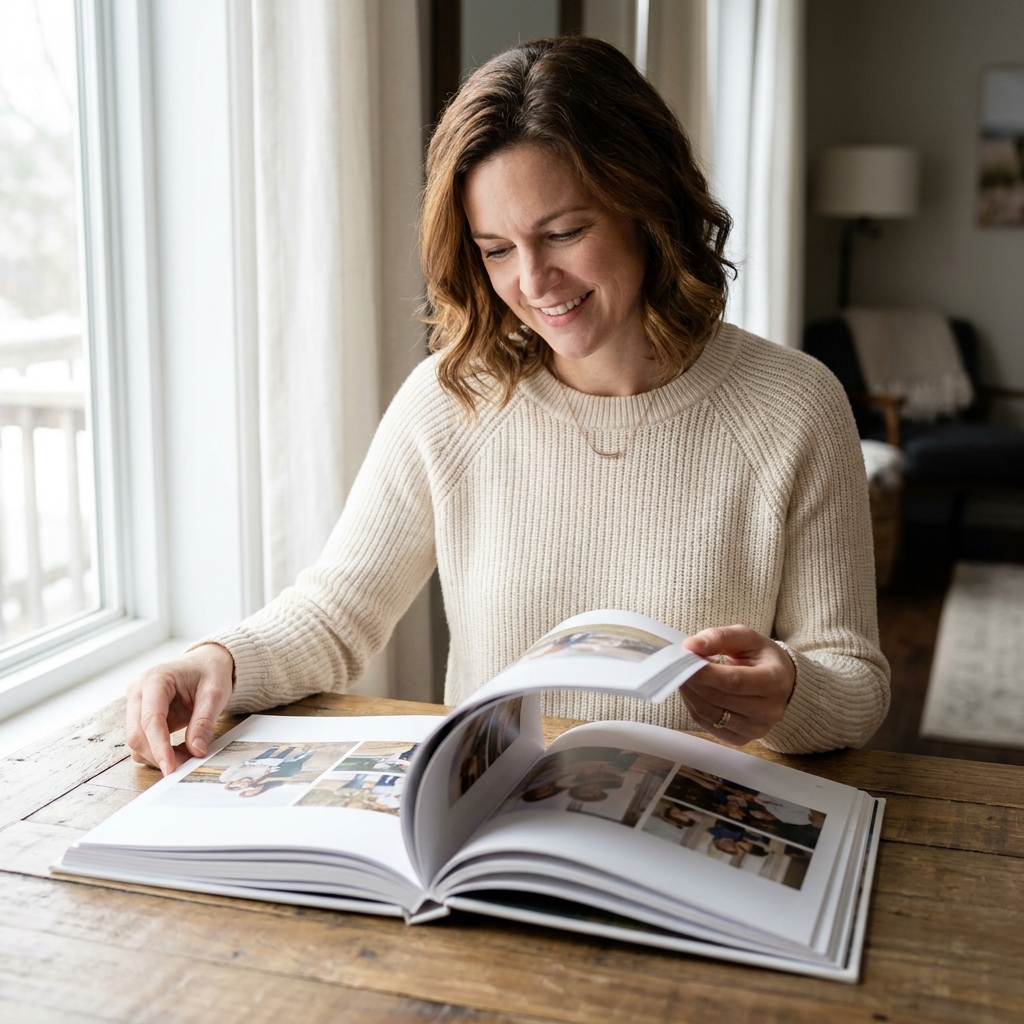
Coffee table books are the rare home decor item that can be both gorgeous and genuinely useful. They hold color and texture like a piece of art, but they also hold stories. A good photography book changes the mood of a room the way a good soundtrack does. An art monograph can make your whole living space feel more intentional, even if there’s a throw blanket permanently living on the sofa.
Below is my favorite way to curate and display art and photography books so your coffee table looks elevated, not staged. Think of it like styling a tiny, inviting bookstore front table in your own living room.
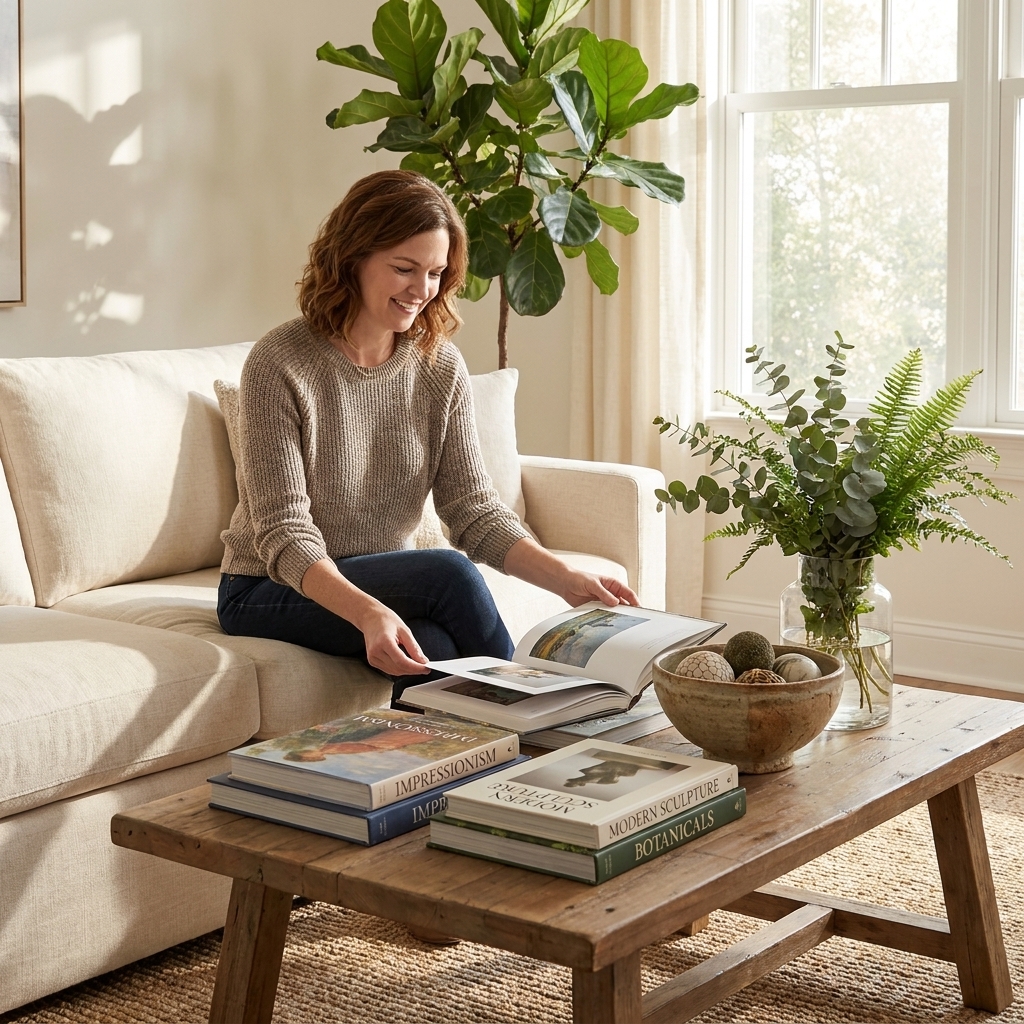
Start with your table
Before you pick books, take a quick look at your coffee table like a designer would. Shape, scale, and surface material all matter because art books are heavy, and they can visually dominate faster than you’d expect.
- Small table: Choose 1 to 3 oversized books total, not a whole library. Negative space is your best friend.
- Large table or sectional setup: Create two zones so the table feels balanced. One zone can be books, the other can be a tray or a sculptural object.
- Glass table: Keep stacks shorter, and consider a tray under small items so the look feels grounded.
- Ottoman as coffee table: Use a firm tray first, then place books on top so everything stays stable.
Practical note from someone who’s carried too many coffee table books up too many stairs: don’t over-stack if you move your table often. Style shouldn’t require a daily weightlifting routine.
Choose books that feel like you
The best coffee table books are the ones you actually want to open. The secret is to curate by theme and texture, not just by “pretty covers.”
Pick a loose theme
Try one of these approachable anchors:
- A place: Portland street photography, Italian architecture, desert landscapes, coastal modernism.
- A medium: Black-and-white photography, watercolor retrospectives, typography and poster art.
- A mood: Soft and romantic, bold and graphic, minimal and quiet, maximal and playful.
- A culinary side-quest: Food photography, vintage cookbook facsimiles, or restaurant culture history books that read like memoirs.
Mix finishes
A stack looks richer when it includes different materials:
- One linen or cloth-bound hardcover
- One glossy dust jacket (for shine)
- One matte paper jacket (for calm)
- Optional: one oddball format like a spiral-bound art catalog or a compact museum guide
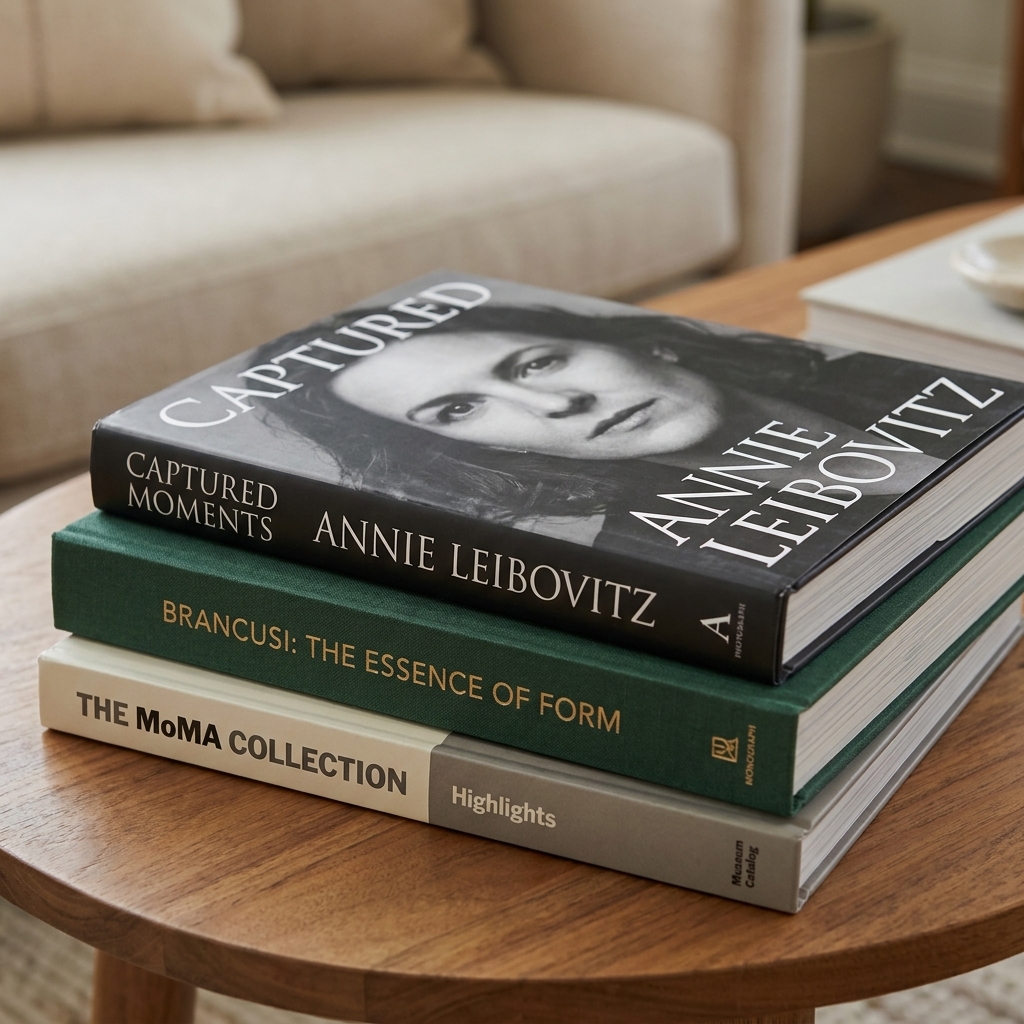
The easy formula: big, medium, small
If you only remember one styling trick, make it this: vary the size. A stack with three similarly sized books can look like you just set them down. A stack with intentional scale reads as styled.
- Base: One large-format art or photography book (the “anchor”).
- Middle: One medium book with a contrasting color or spine.
- Top: One smaller book or catalog that adds a different texture.
For most tables, keeping the tallest stack around 6 to 10 inches high often works best. Much taller than that can start to feel cluttered, and it gets annoying when you want to set down a mug.
Color, without the paint swatch
Color coordination is lovely, but you want it to feel like taste, not a spreadsheet. Here are three approaches that work in real homes.
1) The one-color echo
Choose one color already in your room and repeat it in your book stack. Maybe your rug has rust tones or your sofa is mossy green. Pick covers that include that shade somewhere, even subtly.
2) Neutrals plus one standout
Stack two calmer books (cream, black, gray, tan) and top them with one bold, graphic cover. It instantly looks curated, and it’s easy to refresh seasonally.
3) Monochrome, with texture
All-white or all-black stacks can be stunning, but they need tactile variation. Mix cloth, glossy jacket, and matte paper so the display feels dimensional, not flat.
Arrangements that always work
There’s no single correct layout, but there are a few that reliably look good and still function for everyday life.
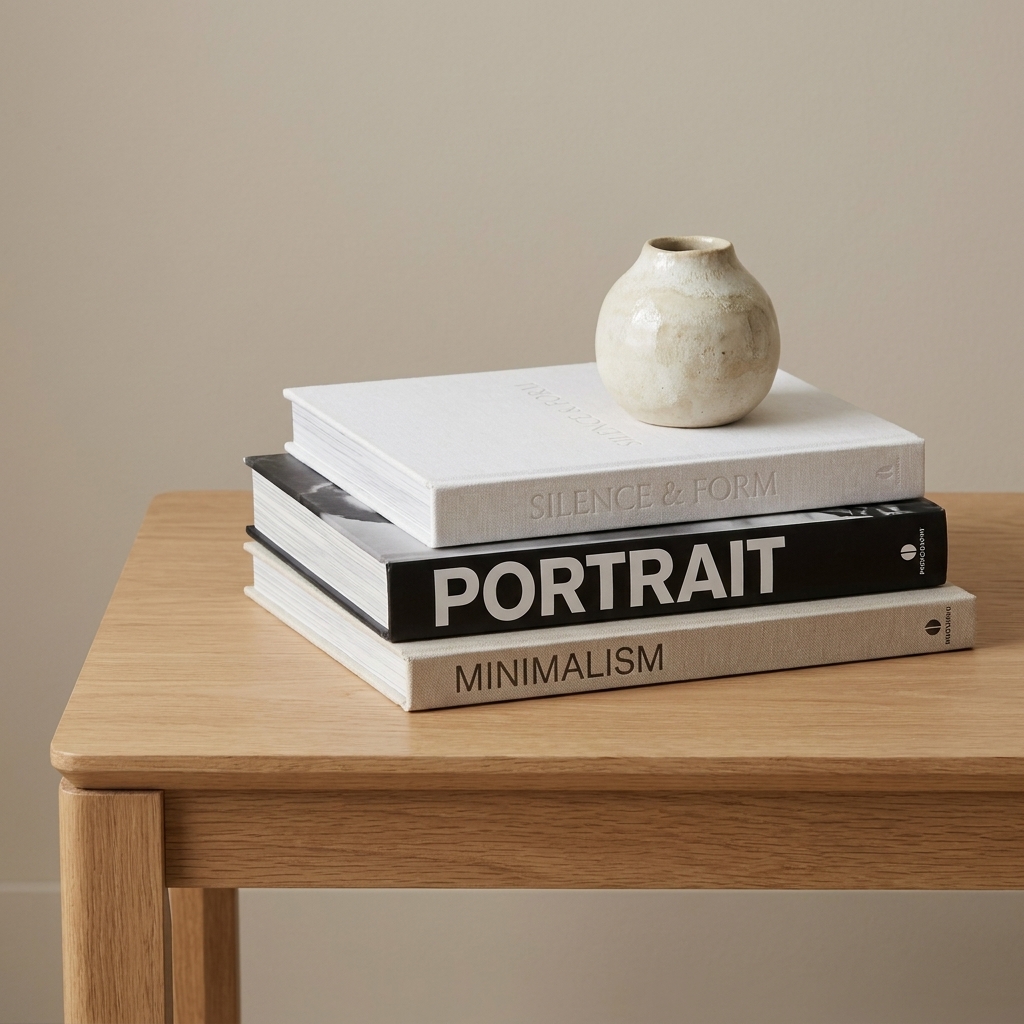
One stack, one object
Perfect for small tables. Create one tidy stack and top it with something sculptural.
- A small ceramic bowl for keys or matches
- A stone coaster
- A simple candle with a clean label
Keep the top object low and stable. Spindly vases and tall candlesticks tend to topple during normal life.
Two stacks, two heights
This is my favorite for larger tables because it gives you balance without fuss.
- Stack A: 2 to 3 books, larger footprint
- Stack B: 1 to 2 books, slightly smaller or taller
Leave a clear landing zone for drinks. You’ll thank yourself later.
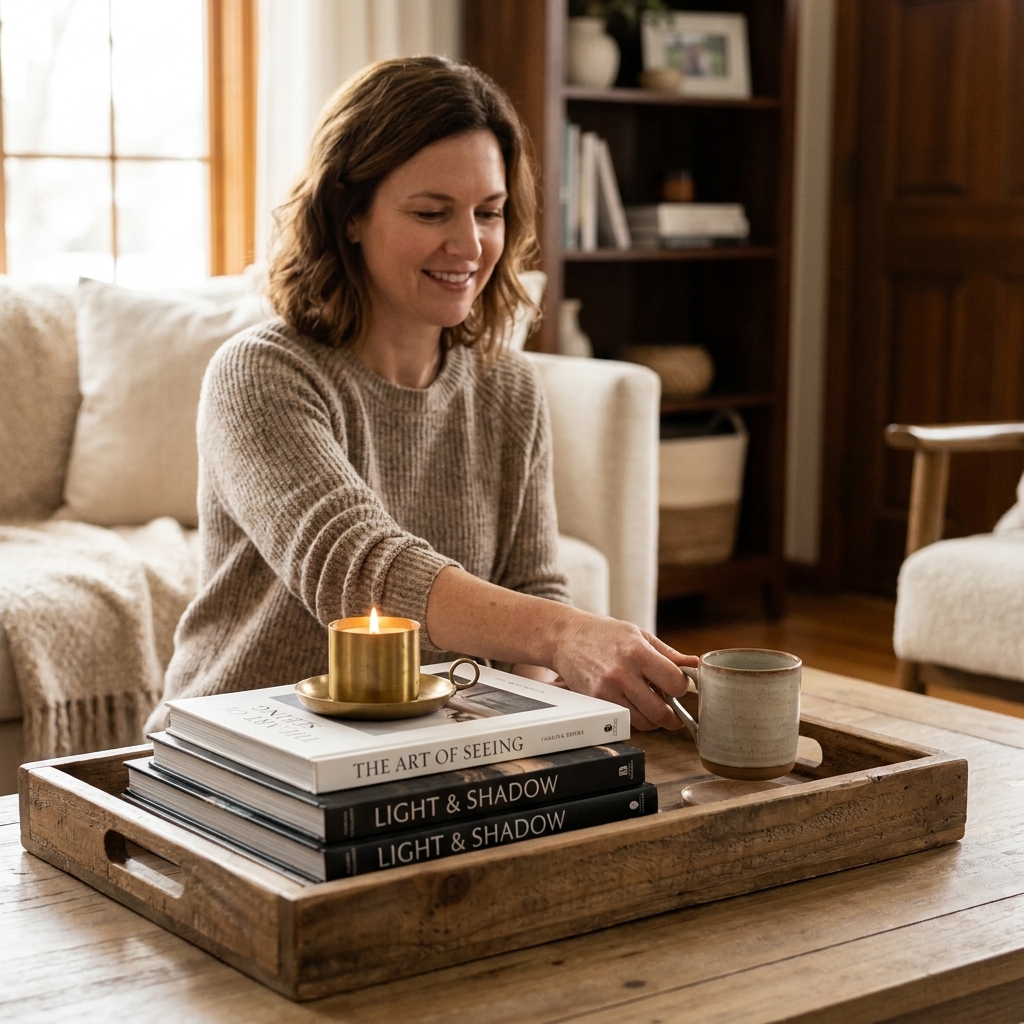
The tray frame
A tray instantly makes a coffee table look organized. Place one stack of books inside the tray, then add one small object. The tray edge acts like punctuation.
Use spines and page edges
Book styling isn’t just covers. Spines and page edges are quiet design tools that make a stack feel intentional.
- Spine-out row: If your table has a lower shelf, use spine-out books there and reserve the top for one stack. It looks like a tiny curated nook.
- Page-edges out: Turning a book so the page edges face outward can soften a stack, especially if the covers are very bold.
- Alternating orientation: Try one book rotated 90 degrees in the stack so the covers don’t line up perfectly. It adds a casual, lived-in rhythm.
Keep it livable
As a former bookstore manager, I can’t not say this: coffee tables are a rough environment. Sun, condensation, snack crumbs, enthusiastic pets. The goal is “beautiful, but not precious.”
Simple protection habits
- Use coasters and keep them within reach of the sofa.
- Avoid direct sun if you can. UV fades jackets faster than you’d think.
- Skip stacking under plants that drip or shed. Even a tiny water ring can warp a cover.
- Rotate the top book occasionally so the same corners aren’t always taking the wear.
Quick cleaning
- Dust with a dry microfiber cloth or a soft, clean rag. (Skip sprays, especially on paper jackets.)
- Wipe tables first so you’re not trapping grit under heavy books.
If you have pets, kids, or rare books
Choose books with sturdier hardcovers or wipeable jackets, and keep rare, valuable, or sentimental volumes on a shelf instead. Slipcased editions and delicate paper covers are better off away from the splash zone.
Where to find great books
You don’t need to buy everything new to create a gorgeous coffee table collection. Honestly, mixing new and secondhand makes the stack feel more personal.
- Independent bookstores: Ask staff for oversized favorites. We love this question.
- Museum shops: Exhibition catalogs are often the perfect “top book” size.
- Library book sales: A goldmine for art monographs and photography collections.
- Thrift shops and estate sales: Look for vintage design annuals, regional photo books, and old cooking titles with beautiful food styling.
When buying secondhand, do a quick check: sniff for mildew, flip through for stuck pages, and make sure the binding feels solid. Your coffee table deserves books that can handle being picked up often.
Quick checklist
- For most tables, 3 to 6 books total is a solid starting point
- Use the big-medium-small formula
- Echo one shade from your room
- Add one low object on top, not three tiny ones
- Leave a clear spot for a mug or bowl
- Rotate seasonally so the table stays fresh
If your coffee table display makes a guest reach for a book without thinking, you nailed it.
FAQ
How many coffee table books should I display?
In a lot of living rooms, 3 to 6 is the sweet spot. One stack of 3 books often looks cleaner than two stacks of 5, especially on smaller tables.
Should coffee table books match my decor?
They should talk to your decor, not mimic it perfectly. A small color echo or a shared mood is enough. A little contrast keeps the table interesting.
What do I put on top of a stack of books?
One thing: a small bowl, a candle, a coaster, or a sculptural object. Keep it stable and low so it feels functional, not fussy.
How do I keep the look from feeling cluttered?
Limit your palette, vary sizes, and leave open space. The empty space is part of the design, and it makes the books feel more special.